
经济学的范式转换——专业解读
经济学的范式转换
The Paradigm Shift in Economics
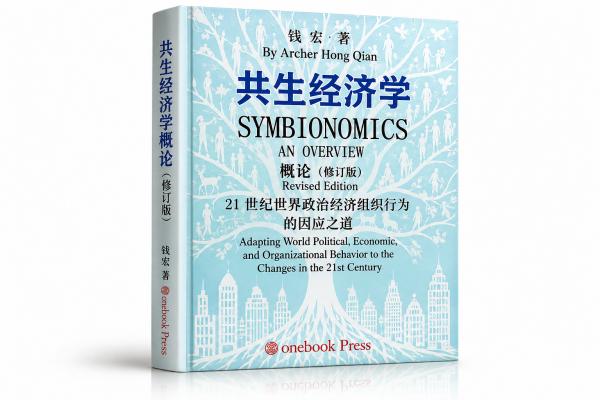
——《共生经济学(修订版)》专业解读(附英文目录)
A Professional Interpretation of Symbionomics (Revised Edition)
Institute for Global Symbiosism(CANADA)
当GDP仍被广泛用来衡量国家繁荣,而家庭体感、组织成本、生態损耗、社会孞托和代际负债的累积,长期处于经济核算的边缘,经济学面对的就不只是统计指标的补充和修正,而是一次价值参量与组织范式的整体转换。
《共生经济学(修订版)》从Economy的发生学意义重新出发,把经济理解为生命在资源、组织和生態环境中展开的自组织生息过程。经济活动创造了多少产值固然重要,这些产值是否降低生活成本,是否赋能家庭与创造者,是否增进人的身心灵健康,是否生成社会孞托,是否维护自然生態与持久和平,同样需要进入经济学的价值判断和效能核算。
基于这一认识,钱宏在共生经济学(Symbionomics)提出GDE国民生产效能以及C—E—H—T—P五项价值参量,以降本(Cost Reduction)、赋能(Empowerment)、健康(Health)、孞托(Trust)与和平(Peace),重新校准经济活动生成的真实综合效能;以η?表示第i项经济活动的资源效能转换系数,以R=GDE/GDP表示一定时期、一定范围内全部名义经济活动转化为真实综合效能的总体资源效能转换率。GDP记录“发生了多少”,GDE检验“值得多少”,R显示“转化了多少”。
R并非与GDP并列的又一项静态指标,而是观察资源流向、价值结果与组织责任的结构尺度。同样的GDP、财政赤字、贸易顺差、货币投放或技术投资,会因为资源流向及其承担者不同,因为它最终降低还是转嫁成本、赋能还是削弱生命、生成还是耗散孞托,而产生完全不同的η与R。由此,那些被传统统计隐去的组织成本、生活收益、健康后果、生態损耗和未来负债,重新进入经济学的观察视野。
如果说GDE首先完成的是经济学价值参量的转换,那么货币通论与组织孞托进一步展开的,则是从价值生成—价值承兑—组织受托关系进入组织范式的转换。
《共生经济学》认为,政治、经济与文化从来不是彼此割裂的存在,现实中的政治、经济与文化问题,也不应被人为划定的学科边界分割处理。人的生命生活,本来就是经济活动、政治秩序与文化创造相互作用、共襄生成的过程。由此,经济学需要从市场—政府的二元钟摆中走出来,重新看见社区经济、市场经济与政府经济三大经济形態各自不可替代的生命功能、组织边界及其交互关系。市场失灵、政府失灵与道德失灵,也就不再只是要求另一方扩大规模加以补救,而要回到生命主体自身的自组织能力与社会自组织力能否持续生长这一根本问题。
Symbionomics由此重新认识经济生活中的行动主体。人不只是追逐个人利益的“理性经济人”,也不只是一个抽象的生产者、消费者或劳动者,而是同时具有经济、政治和文化自组织能力的“仨自组织人”,并在现实组织关系中成为组织共生人。家庭、邻里、社区及各种社会组织所承担的养育、照护、互助、参与、创新、休养生息,并非市场和政府之外无足轻重的“剩余活动”,而是生命得以生长、社会得以修复、创新得以发生的经济基础。
也正是在这里,共生经济学所引发的变化已经超出某一种经济理论自身的修补,开始触及经济学作为一门学科的基本范式转变。史称中国20世纪80年代“改革四君子”之一的朱嘉明,在其序言(2023)中,特别注意到这种转换的经济学(学科)意义,并明确表述为“经济学八大转变(The Eight Transformations of Economics)”:
从理性经济人转向仨自组织人;从产权中心经济学转向共生权范式;从资本增值与GDP转向GDE生命效能;从加减法思维转向乘除法思维;从市场—政府钟摆转向三大经济形態交互共生;从特权消费转向共生生活方式;从地缘政治零和竞争转向有边界的共生全球化;从单中心治理转向组织孞托的多层共生。
共生经济学引发的经济学的八大转变,不是八个彼此并列的新主张,而是一条相互生成的学科转换链:经济学怎样认识人,决定怎样认识权利与价值;怎样认识价值,决定怎样衡量增长;怎样衡量增长,又会改变资源配置、组织形態与生活方式;而组织形態与生活方式的变化,最终必然进入全球秩序与组织孞托。因此,共生经济学带来的真正挑战,不在于用一套新概念替换旧概念,而在于推动经济学从以稀缺、占有、交换、分配和增长为主要问题意识,进一步进入生命、生成、效能、承兑、孞托与共生的关系过程。
由此再追问,经济学中一个长期被价格理论遮蔽的问题便重新显现出来:
价值究竟从哪里发生?
《共生经济学》从劳动价值、使用价值和交换价值继续向前追问,提出Minds Values(思想价值):心智创造价值、交互秩序价值、共生权价值、技术与金融杠杆价值、开放价值,都可能参与真实价值的共襄生成。价值并不等于价格,价值生成也不等于价值已经获得承认和兑现。于是,经济学从价值生成自然进入价值承兑。
在货币理论上,本书由“货币是债”继续推进到:货币是价值承兑的通用凭证。债揭示跨时间的承诺关系,货币使私人承诺获得社会通用性,而任何跨时间、跨组织乃至跨国界的价值承兑,最终都离不开组织孞托。德币、法币与共生币由此呈现出不同的承兑关系;主权货币也不再只是国家发行的支付工具,而成为国家组织对社会价值关系承担受托责任的一种制度形式。
当改革者的价值创造、主权信用、外部受托组织的行动背书与市场预期相互确认,还可能产生组织孞托乘积效应,使尚未完全实现的未来价值进入今天。思想银行与共生币则进一步尝试把Minds Values、数字存证、权利确认、授权流转与受托责任带入货币通论,使思想创造能够被发现、记录、存取、承兑,同时防止新的技术平台再次垄断价值判断与价值分配。《共生经济学(修订版)》因此已经把货币通论明确推进到了组织孞托。
组织孞托由此不再只是道德意义上的“彼此相信”,而成为可以影响成本、赋能、健康、承兑、和平以及组织存续的经济学变量。
这一变化,在人工智能时代尤其具有现实意义。
传统大型组织长期依靠信息集中、专业分工和层级体系形成相对于生命主体的认知优势。AI的普及正在迅速击穿这种信息不对称和“认知剪刀差”。当普通人也能够借助AI寻找、比较、解释和验证复杂信息,组织持久存在的理由便越来越不能建立在“我知道而你不知道”之上,而必须转向:
即使你也知道,我仍然值得你托付。
孞托由此成为一种稀缺的组织效能。它能够降低监督、防范、证明和层级成本,释放生命主体的自组织能力,使组织重新回到与其受托事务相契合的适宜尺度。让“小即是美”从思想洞见进入现实可能。反过来,当政府、企业、平台或AI以自身的程序目标、成本目标和算法目标替换生命主体原有目的,就会发生“受托目的漂移”(Trusteeship Purpose Drift)。修订版已经把这一逻辑正式置于“组织通论”的中心:从信息优势走向孞托优势,从管理能力走向受托能力。
当AI进一步进入政府、企业、金融、医疗、教育和家庭,《共生经济学》提出LIFE—AI—TRUST交互契合共生秩序:生命是目的和最终检验尺度,组织是生命的受托者,AI是组织可以运用的受托能力,而不是受托者本身。AI可以提高信息处理、风险识别、组织协同与价值承兑的能力,却不能代替人及其组织承担受托责任。修订版因此明确提出:“AI Is Entrusted Capability, Not the Trustee”,并最终把问题落在一个文明选择上:究竟继续强化组织,还是赋能生命?
由此看,人工智能带来的真正挑战已经超出技术革命本身。技术革命必须进入组织革命。否则,更强大的计算能力仍可能被异化为控制生命、转嫁责任和制造数位铁笼的工具;只有当技术能力重新接受生命的托付、组织权力重新接受生命效能的检验,AI才能进入LIFE—AI—TRUST的交互契合关系。
重建组织孞托,势在必行!
因为当今世界最大的政治,是人的身心灵健康。政府、企业、非政府组织、平台、社区乃至AI组织,都必须重新证明自身存在的价值:是否降低了生命为组织付出的成本?是否赋能家庭与创造者?是否改善人的健康与自然生態?是否兑现已经作出的价值承诺?是否为下一代留下更大的生活可能?
这也意味着,组织的规模、权力与技术能力不再天然构成组织成功的证明。生命先于组织,组织是生命的受托者。组织边界最终要由生命来检验;组织孞托也必须在降本、赋能、承兑与修复的过程中不断生成。修订版第五编从“重建组织孞托,势在必行”,进一步推进到共生权与组织边界、创建孞托与修复孞托以及LIFE—AI—TRUST,已经形成一条完整的组织通论主线。
走到这里,前面所说的经济学八大转变,已经不再只是理论方向,而获得了一条可以贯通全书的方法路径:
从生命主体与Minds Values重新发现价值生成;以GDE、η与R重新检验价值效能;从“货币是债”进入价值承兑;从价值承兑进入组织孞托;从组织孞托进入LIFE—AI—TRUST;再由企业、社区、政府的分层实践进入全球化3.0与生活基础设施。
八大转变由此展开为同一个生成过程:人的重新发现,引起价值的重新发现;价值的重新发现,引起经济效能尺度的改变;尺度的改变进入货币承兑与组织责任,最终推动经济学重新回到生命生活。
因此,这本书试图完成的,并非为传统经济学再增加一组概念或指标,而是从Economy发生学—Minds Values价值生成—GDE价值效能核算—价值承兑的货币通论—组织孞托的组织通论一路推进,再进入企业、社区、政府、全球化3.0与生活基础设施的现实展开。修订版最后以“Production Returns to Living”收束全书,并以《让哲学重新回到生命》作跋,使这条理论路线重新回到它最初的问题。
经济,究竟为什么发生?
答案最终仍然落在生命本身:
生产回归生活,
生活呈现生態,
生態激励生命。
The Paradigm Shift in Economics
A Professional Interpretation of Symbionomics (Revised Edition)
Institute for Global Symbiosism (Canada)
As GDP continues to be widely used as a measure of national prosperity, the lived experience of families, organizational costs, ecological losses, the erosion of social trust, and the accumulation of intergenerational liabilities have long remained at the margins of economic accounting. What economics now confronts, therefore, is more than the supplementation or refinement of statistical indicators. It is an overall transformation of value parameters and the organizational paradigm.
Symbionomics (Revised Edition) returns to the genesis of the word Economy, understanding the economy as a self-organizing process through which life sustains and regenerates itself amid resources, organizations, and ecological environments. How much output economic activity produces certainly matters. But whether that output reduces the cost of living, empowers families and creators, enhances the physical, mental, and spiritual health of human beings, generates social trust, and sustains natural ecology and lasting peace must likewise enter economic value judgment and effectiveness accounting.
On this basis, Archer Hong Qian proposes within Symbionomics the concept of GDE (Gross Domestic Effectiveness) and its five value parameters, C–E–H–T–P: Cost Reduction, Empowerment, Health, Trust, and Peace. Together they recalibrate the real comprehensive effectiveness generated by economic activity. η? represents the resource-effectiveness conversion coefficient of the ith economic activity, while R = GDE/GDP represents the overall resource-effectiveness conversion ratio by which nominal economic activity, within a given period and scope, is transformed into real comprehensive effectiveness. GDP records “how much happened”; GDE examines “how much was worthwhile”; R reveals “how much was converted.”
R is not simply another static indicator placed alongside GDP. It is a structural measure for observing resource flows, value outcomes, and organizational responsibility. The same GDP, fiscal deficit, trade surplus, monetary issuance, or technological investment may generate entirely different η and R values depending on where resources flow and who bears the resulting costs—whether an activity reduces or shifts costs, empowers or weakens life, generates or dissipates trust. Organizational costs, benefits to living, health consequences, ecological losses, and future liabilities that conventional statistics have obscured can thereby re-enter the field of economic observation.
If GDE first accomplishes a transformation in the value parameters of economics, the general theory of money and organizational trust carry the inquiry further—from value generation → value fulfillment → organizational trusteeship—and thereby into a transformation of the organizational paradigm.
Symbionomics holds that politics, economics, and culture have never existed as separate realities. Nor should real political, economic, and cultural problems be fragmented by artificially drawn disciplinary boundaries. Human life and living are inherently processes in which economic activity, political order, and cultural creation interact and co-generate one another. Economics must therefore move beyond the binary pendulum between market and government and rediscover the three economic forms—community economy, market economy, and government economy—each with its irreplaceable functions for life, its organizational boundaries, and its relations of interaction.
Market failure, government failure, and moral failure can no longer be treated merely by asking the other side to expand in scale as a remedy. The more fundamental question is whether the self-organizing capacities of living subjects and the self-organizing capacities of society can continue to grow.
Symbionomics accordingly reconsiders the acting subject of economic life. Human beings are not merely “rational economic men” pursuing individual interests, nor are they simply abstract producers, consumers, or workers. They are the Three Self-Organizing Persons, possessing economic, political, and cultural capacities for self-organization, while also becoming Organizational Symbiotic Persons within real organizational relationships.
Child-rearing, caregiving, mutual aid, participation, innovation, rest, recuperation, and renewal undertaken by families, neighborhoods, communities, and diverse social organizations are not insignificant “residual activities” outside market and government. They constitute an economic foundation upon which life can grow, society can repair itself, and innovation can arise.
It is precisely here that the changes set in motion by Symbionomics go beyond the revision of any particular economic theory and begin to touch the fundamental paradigm of economics as a discipline.
Jiaming Zhu, historically known as one of China’s “Four Gentlemen of Reform” of the 1980s, paid particular attention in his 2023 Foreword to the significance of this transformation for economics as a discipline. He explicitly formulated it as “The Eight Transformations of Economics”:
from Rational Economic Man to the Three Self-Organizing Persons;
from property-centered economics to the paradigm of Symbiorights;
from capital appreciation and GDP to GDE life effectiveness;
from additive–subtractive thinking to multiplicative–divisive thinking;
from the market–government pendulum to the interactive symbiosis of the three economic forms;
from privileged consumption to a symbiotic way of living;
from geopolitical zero-sum competition to bounded symbiotic globalization;
and from single-center governance to multilevel symbiosis of organizational trust.
These Eight Transformations of Economics set in motion by Symbionomics are not eight separate new propositions. Together they form a generative chain of disciplinary transformation. How economics understands the human being determines how it understands rights and value; how it understands value determines how it measures growth; how it measures growth, in turn, changes resource allocation, organizational forms, and ways of living; and changes in organizational forms and ways of living ultimately enter global order and organizational trust.
The real challenge posed by Symbionomics, therefore, does not lie in replacing one vocabulary with another. It lies in moving economics beyond a primary preoccupation with scarcity, possession, exchange, distribution, and growth, and further into the relational processes of life, generation, effectiveness, fulfillment, trust, and symbiosis.
This brings back into view a question long obscured by price theory:
Where does value arise?
Symbionomics moves beyond labor value, use value, and exchange value to propose Minds Values: the value of mental creation, the value of intersubjective order, the value of Symbiorights, technological and financial leverage value, and the value of openness. All may participate in the co-generation of real value.
Value is not equivalent to price. Nor does the generation of value mean that value has already been recognized and fulfilled. Economics thus moves naturally from value generation into value fulfillment.
In monetary theory, the book advances from “money is debt” to a further proposition:
Money is a generally accepted instrument of value fulfillment.
Debt reveals a relationship of commitment across time. Money gives private commitments social generality. Yet value fulfillment across time, across organizations, and even across national borders ultimately depends upon organizational trust. Virtue money, fiat money, and symbiotic money therefore embody different fulfillment relationships. Sovereign money is no longer merely a means of payment issued by the state; it becomes an institutional form through which the sovereign organization assumes trusteeship responsibility for social value relationships.
When the value creation of reformers, sovereign credibility, the action-backed endorsement of external trustee organizations, and market expectations mutually confirm one another, a multiplicative effect of organizational trust may arise, allowing future value that has not yet been fully realized to enter the present.
The Mind Bank and Symbiotic Currency further attempt to bring Minds Values, digital evidence, rights confirmation, authorized circulation, and trusteeship responsibility into the general theory of money. Mental creation can thereby be discovered, recorded, deposited, accessed, and fulfilled, while preventing new technological platforms from once again monopolizing value judgment and value distribution.
Symbionomics (Revised Edition) thus explicitly carries its general theory of money forward into organizational trust.
Organizational trust is no longer merely “believing in one another” in a moral sense. It becomes an economic variable capable of affecting cost reduction, empowerment, health, fulfillment, peace, and the very viability of organizations.
This transformation acquires particular practical significance in the age of artificial intelligence.
Large traditional organizations have long relied upon concentrated information, professional specialization, and hierarchical systems to maintain a cognitive advantage over living subjects. The spread of AI is rapidly breaking through this information asymmetry and the resulting “cognitive scissors gap.”
When ordinary people can also use AI to search, compare, interpret, and verify complex information, the enduring justification for an organization can no longer rest on:
“I know, and you do not.”
It must increasingly become:
Even if you know too, I am still worthy of your entrustment.
Trust thereby becomes a scarce form of organizational effectiveness. It can reduce the costs of supervision, precaution, proof, and hierarchy; release the self-organizing capacities of living subjects; and return organizations to a scale appropriate to the matters entrusted to them—allowing Small Is Beautiful to move from intellectual insight toward practical possibility.
Conversely, when governments, enterprises, platforms, or AI substitute their own procedural, cost, or algorithmic objectives for the original purposes of living subjects, Trusteeship Purpose Drift occurs. The Revised Edition places this logic at the center of its General Theory of Organization: from informational advantage to trust advantage, and from management capacity to entrusted capacity.
As AI moves further into government, business, finance, healthcare, education, and the family, Symbionomics proposes the LIFE–AI–TRUST interactive and mutually attuned symbiotic order:
Life is the purpose and the ultimate criterion of evaluation.
Organization is the trustee of life.
AI is an entrusted capability that organizations may employ; it is not itself the trustee.
AI can strengthen information processing, risk identification, organizational coordination, and value fulfillment, but it cannot replace human beings and their organizations in assuming trusteeship responsibility. The Revised Edition therefore states explicitly:
AI Is Entrusted Capability, Not the Trustee.
The question ultimately becomes a civilizational choice:
Do we continue to reinforce organization—or empower life?
Seen in this light, the challenge posed by artificial intelligence has already moved beyond technological revolution itself. Technological revolution must enter organizational revolution. Otherwise, greater computational power may still be alienated into an instrument for controlling life, shifting responsibility, and constructing a digital iron cage. Only when technological capability once again accepts the entrustment of life, and organizational power once again submits itself to the test of life effectiveness, can AI enter the mutually attuned relationship of LIFE–AI–TRUST.
Rebuilding Organizational Trust Is Imperative!
For the greatest politics in the world today concerns the physical, mental, and spiritual health of human beings.
Governments, enterprises, nongovernmental organizations, platforms, communities, and even AI organizations must all demonstrate anew the value of their existence:
Do they reduce the costs that life must bear for organization?
Do they empower families and creators?
Do they improve human health and natural ecology?
Do they fulfill the value commitments they have made?
Do they leave greater possibilities for living to the next generation?
The scale, power, and technological capability of an organization therefore no longer constitute self-evident proof of organizational success.
Life precedes organization. Organization is a trustee of life.
Organizational boundaries must ultimately be tested by life; organizational trust must continuously be generated through cost reduction, empowerment, fulfillment, and repair. Part V of the Revised Edition develops a coherent General Theory of Organization from “Rebuilding Organizational Trust Is Imperative!” through Symbiorights and organizational boundaries, the creation and restoration of trust, and finally LIFE–AI–TRUST.
At this point, the Eight Transformations of Economics described above are no longer merely theoretical directions. They have acquired a methodological pathway running through the entire book:
from the living subject and Minds Values to the rediscovery of value generation;
through GDE, η, and R to a renewed test of value effectiveness;
from “money is debt” to value fulfillment;
from value fulfillment to organizational trust;
from organizational trust to LIFE–AI–TRUST;
and from layered practice in enterprises, communities, and government to Globalization 3.0 and living infrastructure.
The Eight Transformations thus unfold as one generative process: the rediscovery of the human being leads to the rediscovery of value; the rediscovery of value changes the measure of economic effectiveness; that change in measurement enters monetary fulfillment and organizational responsibility; and ultimately economics is brought back to life and living.
The aim of this book, therefore, is not simply to add another set of concepts or indicators to conventional economics. It advances from the genesis of Economy → the generation of Minds Values → GDE accounting for value effectiveness → the General Theory of Money centered on value fulfillment → the General Theory of Organization centered on organizational trust, and from there into practical applications in enterprises, communities, government, Globalization 3.0, and living infrastructure.
The Revised Edition concludes with “Production Returns to Living,” followed by the Epilogue, Let Philosophy Return to Life, bringing this theoretical journey back to the question with which it began:
Why does economy arise at all?
The answer ultimately returns to life itself:
Production returns to living.
Living reveals ecology.
Ecology inspires life.
Table of contents
Jiaming ZHU:An Alternative Lens and Method A Foreword to Symbionomics
AUTHOR’S PREFACE: Where Does Economy Arise?
I. A Question Beginning with the “Ultimate Free Lunch”
II. Economy Originally Meant Tending the Home
III. I Have Come to Believe That Economics Needs to “Remove the Excess”
IV. “孞”: From Mind to Entrustment
V. Population Is Life Before It Is a Number
VI. From the Language of Life to the Language of AI
VII. From Genesis and Dynamics to Synergetics
VIII. From an Age of Scarcity toward an Age of Abundance
PREFACE: A Symbiotic Way of Life Gives Rise to Symbionomics
I. When Students Asked Economics to Return to Reality
II. Economics’ Half-Century of Self-Rescue
III. Beginning from Life, Symbionomics Emerges
IV. From Rational Economic Man to the Three Self-Organizing Persons
V. Why Growth Must Be Tested by Life
VI. Re-evaluating Growth through Energy Transformation and Information Flow
VII. Why Symbionomics Arises Now
PART I: From Economic Man to the Symbiotic Subject: The Theoretical Point of Departure of Symbionomics
CHAPTER ONE: From Rational Economic Man and Man in Action to the Three Self-Organizing Persons
I. Behind Every Economics Stands a Conception of the Human Being
II. How Smith’s Whole Human Being Was Compressed into Rational Economic Man
III. Mises’s Man in Action: From Equilibrium Models Back to Purposive Human Action
IV. Why “Man in Action” Is Still Not Enough
V. The Intellectual Genesis of the Three Self-Organizing Persons
VI. The Threefold Structure of the Three Self-Organizing Persons
VII. From Mind and Behavior to Institutions: Self-Organization Is Not Laissez-Faire
VIII. From the Subject–Object Binary to Mutual Subjecthood
IX. How the Three Self-Organizing Persons Change the Explanation of Economic Reality
X. From “What Is the Human Being?” to “How Is Value Generated?”
CHAPTER TWO: How Life’s Self-Organization Generates Minds Values
I. Why Value Theory Re-emerges at Every Turning Point of an Age
II. From “Intellectual Capital” to Minds Values: An Intellectual Encounter in 2016
III. Why Mind Must Become Minds
IV. The First Dimension of Minds Values: Value of Mental Creation
V. The Second Dimension of Minds Values: Value of Intersubjective Order
VI. The Third Dimension of Minds Values: Value of Symbiorights
VII. The Fourth Dimension of Minds Values: Technological and Financial Leverage Value
VIII. The Fifth Dimension of Minds Values: Value of Openness
IX. How the Five Dimensions Co-generate Minds Values
X. Minds Values Are Not Price: Positive, Negative, and Undetermined Value
XI. From Minds Values to the Mind Bank
XII. From Value Generation to Symbiorights
CHAPTER THREE: From Intersubjectivity to Intersubjective Symbiosism The Philosophical and Jurisprudential Foundations of Symbiorights
I. Why Economics Cannot Avoid the Question of the Subject
II. The Subject–Object Duality Built Knowledge—and Left a Shadow of Domination
III. Intersubjectivity: From the Isolated “I” to the Discovery of “You”
IV. Why Intersubjectivity Must Continue toward Intersubjective Symbiosism
V. Life Is Self-Sufficient, Yet Not Self-Contained
VI. You, Me, and Others: How Full-Person Subjecthood Is Formed
VII. Intersubjective Symbiosism: From Relations of Recognition to Relations of Generation
VIII. The Genesis of Symbiorights: The Right to Live and to Co-Generate Growth
IX. Human Rights, Rights to Act, Property Rights, and Rights of Ecological Life
X. Rights, Power, Interests, Responsibility, and Effective Capacity Must Be Reconnected
XI. From Homogenizing Community to the Symbiont of Difference
XII. How Symbiorights Change the Questions Economics Asks
CHAPTER FOUR: The Interactive Symbiosis of the Three Economic Forms: Community, Market, and Government
I. Where the Three Economic Forms Come From
II. From “Whole and Unity” to “Relation and Process”
III. Economic Forms Are Not Ownership Types, Industries, or Sectors
IV. Community Economy: The Foundation of People’s Livelihood and the Birthplace of Innovation
V. Market Economy: A Foundation of Civil Rights and the Boundary of Effective Utility
VI. Government Economy: The Body of the Nation and Its Absolute Boundaries
VII. People’s Livelihood, Civil Rights, and the Nation: Three Functions of a Healthy National Organism
VIII. Interaction: How Value Is Generated across the Three Forms
IX. Complementarity: No Organization Needs to Become Omnipotent
X. Mutual Flow: Economic Forms Need Mechanisms of Transformation
XI. Effectiveness Standards for the Three Forms Cannot Be Mixed
XII. From Investment–Domestic Demand–Exports Back to Production–Exchange–Living
XIII. A Revolution in Economic Form
CHAPTER FIVE: The Eight Transformations of Economics: From the Logic of Distribution to the Logic of Generation
I. Why “Transformations,” Rather Than a New Set of Doctrines
II. The First Transformation: From Rational Economic Man to the Three Self-Organizing Persons
III. The Second Transformation: From Property-Centered Economics to the Paradigm of Symbiorights
IV. The Third Transformation: From Capital Appreciation and GDP to GDE Life Effectiveness
V. The Fourth Transformation: From Additive–Subtractive Thinking to Multiplicative–Divisive Thinking
VI. The Fifth Transformation: From the Market–Government Pendulum to Triadic Symbiosis
VII. The Sixth Transformation: From Privileged Consumption to a Symbiotic Way of Living
VIII. The Seventh Transformation: From Geopolitical Zero-Sum Competition to Bounded Symbiotic Globalization
IX. The Eighth Transformation: From Single-Center Governance to Multilevel Symbiosis of Organizational Trust
X. How the Eight Transformations Form a Generative Structure
XI. From the Logic of Distribution to the Logic of Generation
PART II: From Growth Myths to Systemic Distortion: A Symbiotic Pathology of the Modern Economy
CHAPTER SIX: The Golden Rule of Economic Growth and the Golden Law of Economic Health
I. What Growth Theory Actually Answers
II. Phelps and the Golden Rule of Economic Growth
III. The Shanghai Encounter: A Question from Models Back to Living
IV. Four Real Burdens Outside the Growth Model
V. From Two Statements to Six Resource–Asset/Liability Statements
VI. The Golden Law of Economic Health Redefines the Purpose of the Economy
VII. Three Criteria: Quantity, Energy, and Trust
VIII. H = G/T: How Good Governance Enters the Lived Experience of People
IX. The Golden Law of Economic Health Is Not the Maximization of Health
X. From the Health Criterion into the GDP Myth
CHAPTER SEVEN: The GDP Myth and the Divergence Between Macroeconomic Prosperity and Lived Experience
I. Why GDP Became the Common Language of the Modern Economy
II. Capacity of Scale Cannot Substitute for Outcomes of Living
III. Effective Growth, Ineffective Growth, and Destructive Growth
IV. How Macroeconomic Prosperity Becomes Detached from Lived Experience
V. Why Strong GDP, PPP, and Foreign-Exchange Reserves May Still Fail to Produce a Prosperous Nation and Strong People
VI. How Much Can Distribution Explain, and What Does the Conversion Mechanism Still Conceal?
VII. When Indicators Become Commands: How the System Reinforces Itself
VIII. From GDP as Original Flow to η Effectiveness Filtering
IX. From Indicator Distortion Back to Economic Mechanisms
X. Growth Must Ultimately Answer to Living
CHAPTER EIGHT: The Penal Economy, Wealth-Multiplication Economy, and Planned Economy: Historical Matrices of Bureaucolonialism
I. Why Trace These Three Historical Mechanisms
II. The Penal Economy: Turning Life into Requisitionable Manpower
III. Why Penal Mechanisms Can Produce “Glory”
IV. The Wealth-Multiplication Economy: How Wealth Becomes a Channel to Power
V. From Mercantilism to Government Corporatism
VI. Three Economic Origins: Penal Economy, Wealth Multiplication, and State Enterprise
VII. From Rational Economic Man to the Organizational Symbiotic Person
VIII. The Historical Capacity and Conditions of Emergence of the Planned Economy
IX. How Planning Changes from a Coordinating Instrument into Organizational Command
X. How the Three Mechanisms Overlap Across Historical Periods
XI. Bureaucolonialism: When Organization Becomes a Self-Reproducing Subject
XII. Why Changes of Regime Fail to End Structural Suffering
XIII. From Historical Matrices to Modern Systemic Distortion
CHAPTER NINE: Systemic Illusions and the Century-Long Reshuffling: The Organizational Roots of the Market Freedom–Government Control Pendulum
I. The Century-Long Pendulum: The Predicament of “Control Kills, Release Revives”
II. Market Failure: Prices Cannot Carry All Value
III. Government Failure: How Public Trusteeship Becomes Organizational Self-Interest
IV. Moral Failure: Why Responsibility Can Always Be Shifted
V. The Century-Long Reshuffling: Why Resource Transfers Do Not Equal Institutional Generation
VI. Systemic Illusion: How Distortion Is Stably Presented as Success
VII. How the Six Layers of Illusion Generate One Another
VIII. Why Local Rationality Co-Generates Overall Distortion
IX. How Narratives of Left and Right Jointly Conceal the Organizational Problem
X. How Digital Technology Dresses Old Illusions in New Clothes
XI. Why Reform Keeps Creating New Problems After Solving Old Ones
XII. From Choices of Ownership to Value Effectiveness and Organizational Trust
PART III: From GDP to GDE: A Measurement Revolution in Life Effectiveness
CHAPTER TEN: GDE Value Parameters: The C–E–H–T–P Five-Factor Structure
I. The Measurement Revolution Begins with Value Judgment
II. C: Cost Reduction Does Not Mean Shifting Costs onto the Weak
III. E: Empowerment Means Strengthening Life’s Capacity for Self-Organization
IV. H: Health as Whole-Ecology Dynamic Balance
V. T: From Credit Records to Organizational Trust
VI. P: Peace as the Environment of Value Generation
VII. Why the Five Factors Must Interact
VIII. Four Levels of Observation
IX. GDE and Existing Statistical Systems
X. From the Five Factors to Effectiveness Filtering
CHAPTER ELEVEN: The R Law and the Resource-Effectiveness Conversion Ratio: The Civilizational Content of Growth
I. From a Value Coordinate to a Conversion Mechanism
II. What Exactly Is η??
III. How η? Is Generated from the Five Factors
IV. GDE Is the Aggregate Amount of Effectiveness
V. R = GDE/GDP: The Overall Resource-Effectiveness Conversion Ratio
VI. Why R Can Be Greater Than 1
VII. How R Differs from Productivity, Energy Efficiency, and Welfare Indicators
VIII. What H = G/T and R Each Answer
IX. Time, Level, and Measurement Convention
X. Bringing R into Cross-Country Comparison: Outcomes, Structures, and Transitions
XI. Preventing η and R from Becoming New Systemic Illusions
XII. From the Conversion Ratio to the Six Accounts
CHAPTER TWELVE: Six Resource–Asset/Liability Statements: Re-Accounting for Shifted Costs
I. Why Two Balance Sheets Are Not Enough
II. Resources, Assets, and Liabilities
III. The Nature Resource–Asset/Liability Statement
IV. The Society Resource–Asset/Liability Statement
V. The Government Resource–Asset/Liability Statement
VI. The Enterprise Resource–Asset/Liability Statement
VII. The Community Resource–Asset/Liability Statement
VIII. The Household Resource–Asset/Liability Statement
IX. How Value Flows among the Six Statements
X. Why the Same Trade Surplus Can Produce Different R
XI. Explicit Costs, Hidden Contributions, and Intertemporal Debt
XII. Common Constraints First, Commensurability Second
XIII. From Satellite Accounts to Responsibility Accounts
XIV. How the Six Statements Support η, GDE, and R
XV. Entering the State, Enterprise, and Capital Markets
CHAPTER THIRTEEN: How GDE Enters the State, Enterprise, and Capital Markets
I. From Measurement Results to Decision Conditions
II. The State: Move Policy Evaluation Before Resource Commitment
III. Effectiveness Constraints on Budgets, Taxation, and Public Debt
IV. Enterprise: Establish a Real-Value Income Statement Beyond Profit
V. Investment, Technology, and AI: Distinguishing Effectiveness-Enhancing Innovation from Dissipative Innovation
VI. Capital Markets: Price Is Not a Synonym for Value
VII. Stock Markets: From Profit-Growth Companies to Rising-R Enterprises
VIII. Housing Markets: Separating Residential Effectiveness from Asset Prices
IX. Bond Markets: From Repayment Narratives Back to Effectiveness Assets
X. Health Value and Four Structural Indices
XI. Ex Ante Identification, In-Process Calibration, and Ex Post Responsibility
XII. Experimental Pathways and Preventing Indicator Alienation
XIII. From Effectiveness Measurement to Value Fulfillment
PART IV: From Monetary Credit to Value Fulfillment: The General Theory of Money in Symbionomics
CHAPTER FOURTEEN: Money Is Debt: The Genesis of Value Fulfillment
I. After Measurement, Why Must We Enter the Question of Money
II. Money Is, First of All, Not a Thing
III. Value Fulfillment Occurs After Value Has Already Been Delivered
IV. Debt Arises from the Time Lag and Also Connects Present and Future
V. Understanding Debt through the Threefold Relation of Ren, Zhu, and Bei
VI. Currency: How Private Promises Become Social Promises
VII. The Four Functions of Money Should Return to the Fulfillment Relationship
VIII. From Private Debt to Organizational Debt
IX. Sovereign Money: The State Aggregates Social Debt
X. Why the Quantity of Money Can Separate from Real Value
XI. Debt Is Not Original Sin; Failure of Responsibility Turns Debt into Extraction
XII. How GDE Recalibrates the Fulfillment Foundation of Money
XIII. Three Fundamental Conditions of Value Fulfillment
XIV. A General Theory of Money Begins with Debt
CHAPTER FIFTEEN: Virtue Money, Fiat Money, and Symbiotic Money: The Diachronic and Synchronic Dimensions of Monetary Civilization
I. Three Forms of Money, Three Fulfillment Relationships
II. Virtue Money: Character as the Earliest Credit Account
III. The Strength of Virtue Money Is Also Its Boundary
IV. Fiat Money: Sovereign Organization Connects Strangers
V. Fiat Money Is a Public Trusteeship, Not an Unlimited Power of Issuance
VI. Symbiotic Money: Fulfilling Value Generated through Interaction
VII. The Diachronic Transition from Person to Organization to Structure
VIII. Synchronic Coexistence in Contemporary Society
IX. Functions and Boundaries of the Three Forms of Money
X. Mutual Calibration, Not Mutual Absorption
XI. Digital Currency Does Not Automatically Become Symbiotic Money
XII. Necessary and Sufficient Conditions for Symbiotic Money
XIII. Using GDE and the Six Statements to Test the Three Forms of Fulfillment
XIV. From Monetary Forms to the Test of Organizational Trust
CHAPTER SIXTEEN: Value Fulfillment and Organizational Trust: A Comparative Test of Sovereign and Trans-Sovereign Money
I. Behind Monetary Confidence Lies Organizational Trust
II. Cross-Country Comparison Is a Stress Test of Method, Not a Ranking
III. Russia’s Transition: Price Liberalization Cannot Substitute for an Entrusted Order
IV. Argentina’s Reform: Signals of Stability Must Pass the Test of Living
V. The US$20 Billion Relationship That Must Be Clarified
VI. Yeltsin and Milei: The Difference Lies in Sequence and the Structure of Responsibility
VII. The Multiplicative Effect of Organizational Trust
VIII. The Yen in 1998: Coordinated Action as a Conditional Signal
IX. The Euro: The Tension between a Common Currency and Decentralized Fiscal Systems
X. Sterling: Retaining Sovereign Adjustment Is Not Inherently Superior
XI. The Entrusted Responsibility of an Internationalized Sovereign Currency
XII. The Capacities and Limits of Trans-Sovereign Instruments
XIII. Comparing with GDE, R, and the Six Statements
XIV. The Mode of Thought Established by Comparison
CHAPTER SEVENTEEN: Mind Bank and Symbiotic Currency: Rights Confirmation, Deposit–Access–Fulfillment of Minds Values, and Reward–Restrain Mechanisms
I. What Modern Society Lacks Is Not Ideas, but a Mechanism of Fulfillment
II. Minds Values: Mental Generation beyond Labor Value
III. Four Institutional Difficulties of Minds Values
IV. What a Mind Bank Is—and Is Not
V. Discovery: Bringing Off-Account Contributions into View
VI. Recording: Building a Contribution Chain Rather than a Pantheon of Heroes
VII. Rights Confirmation: Unbundle Rights to Prevent Enclosure
VIII. Deposit, Access, and Fulfillment: Three Actions of the Minds Account
IX. The Minds Resource–Asset/Liability Statement
X. The Symbiotic Chain: A Verification Ledger, Not a Truth Machine
XI. Assetization and Tokenization of Thought, and the Token-Art Metaverse
XII. Stablecoin Is an Embryo and a Bridge, Not the Completed Form
XIII. Necessary Conditions for Issuing Symbiotic Currency
XIV. Sufficient Conditions: A Dynamic Mechanism of Reward, Restrain, and Flow
XV. The Role of AI: Expanding Observation without Monopolizing Judgment
XVI. Begin with Bounded Pilots
XVII. The Interface between the Mind Bank and the Fiat-Money System
XVIII. The General Theory of Money Enters Organizational Trust
PART V: Organizational Trust: The General Theory of Organization in Symbionomics
CHAPTER EIGHTEEN: Rebuilding Organizational Trust Is Imperative!
I. From Information Asymmetry to the Cognitive Scissors Gap
II. AI Is Changing How the Cognitive Scissors Gap Is Formed
III. A Blank Sheet of Paper: From Information Processing to Mind and Relationship
IV. Behind Information Asymmetry Lies an Entrusted Relationship
V. Why the Economic Meaning of Organizational Trust Must Be Restored
VI. From Informational Advantage to Trust Advantage
VII. AI Can Also Create a Larger Digital Cognitive Scissors Gap
VIII. LIFE–AI–TRUST: Returning AI to the Entrusted Relationship
IX. Testing Organizational Trust through GDE
X. From Management Capacity to Entrusted Capacity
XI. From Organizational Loss of Trust to Organizational Self-Repair
XII. Organizational Trust Becomes a Scarce Effectiveness in the Digital–Quantum Age
CHAPTER NINETEEN: Symbiorights and Organizational Boundaries: How Life Tests Institutions
I. From Value Fulfillment to Organizational Boundaries
II. Life Precedes Organization
III. Symbiorights: From the Property-Rights Paradigm to Living Relations
IV. Rights of Life: The Initial Condition Prior to Organizational Authorization
V. Rights to Act: The Operational Core of Symbiorights
VI. Rights over Resources: The Baseline Safeguard for Life and Action
VII. Rights of Ecological Life: Bringing Voiceless Subjects into Institutions
VIII. The Unity of Rights of Life, Rights to Act, Rights over Resources, and Rights of Ecological Life
IX. Self-Restraint by the Strong, Self-Encouragement by the Weak, and Mutual Boundary-Setting
X. Three Types of Organizational Boundaries
XI. Institutions Are Not Shoes: A Categorical Distinction
XII. Four Coordinates by Which Life Tests Institutions
XIII. From the Public–Private Dispute to Boundaries of Rights and Responsibilities
XIV. Testing Organizational Boundaries with GDE, R, and the Six Statements
XV. Entrusted Boundaries for Digital Organizations and AI
XVI. Only Clear Boundaries Can Generate Trust
CHAPTER TWENTY: Rebuilding Organizational Trust: From Creating Trust to Restoring Trust
I. Why Organization Becomes a Necessary Medium of Civilization
II. From Credit and Trust to Organizational Trust
III. The Historical Difference Between Creating and Rebuilding Organizational Trust
IV. Philadelphia, 1787: How Organizational Trust Was Created
V. Four Conditions for Creating Organizational Trust
VI. Why Organizations Move from Trusteeship to Alienation
VII. Rebuilding Begins with Unconcealment: Entrusted Power Must Explain Itself to Life
VIII. Four Actions of Rebuilding: Cost Reduction, Empowerment, Fulfillment, and Repair
IX. Four World-Class Cases: Four Paths of Repair
X. The Meaning of Comparison: Identify Mechanisms, Do Not Copy Answers
XI. Rebuilding Trust Does Not Mean the Market Defeats Government
XII. Back-Testing Repair with GDE, R, and the Six Statements
XIII. The Multiplier Effect of Organizational Trust
XIV. From Periodic Correction to Continuous Repair
XV. Organization Is a Trustee of Life
XVI. When AI Enters Organization
CHAPTER TWENTY-ONE: LIFE–AI–TRUST: The Civilizational Choice After Artificial Intelligence Enters Organization
I. AI Has Entered the Interior of Organization
II. Three Leaps in Organizational Capability Brought by AI
III. Three Structural Bottlenecks of AI
IV. Why LIFE Must Precede AI
V. AI Is Entrusted Capability, Not the Trustee
VI. TRUST Is Not a Credit Score; It Is Organizational Accountability
VII. The Interactive Coupling of LIFE–AI–TRUST
VIII. AI Enters the Enterprise: Organizational Choice Beyond Efficiency
IX. AI Enters Government: From the Digital Iron Cage to Public Trusteeship
X. AI Enters Schools, Hospitals, and Families
XI. Data Are Not a Mine; Data Are Living Relations
XII. From Risk Control to Reward–Restrain–Connect
XIII. The Boundaries of AI-Assisted Monitoring
XIV. Begin with Limited-Domain Pilots
XV. From NET and IoT to AM
XVI. Artificial Mind and the Open Direction of MPU
XVII. The Civilizational Choice: Reinforce Organization or Empower Life?
XVIII. Conclusion of Part Five: Let Intelligence Accept Life’s Entrustment。
PART VI: The Layered Realization of Minds Values: Practical Pathways for Symbionomics
CHAPTER TWENTY-TWO: Creative Breakthrough: Layered Practice in Enterprises, Communities, and Government
I. The Engine Schumpeter Left Us
II. Recent Nobel Prizes Reconnect Innovation and Institutions
III. Why Destruction Can Still Remain Trapped in the Old Game
IV. Creative Breakthrough: Opening an Exit the System Did Not Provide
V. Musk’s Mechatronic Ecology: How Engineering Constraints Become Entrances to Innovation
VI. Cost Reduction and Empowerment Must Occur Together
VII. Enterprise: Open the Income Statement into Six Statements
VIII. Community: Let Rest and Recuperation Become Economy Again
IX. Market: Keep Discovery, Exchange, and Exit Open
X. Government: Public Trusteeship Rather Than Uniform Production
XI. Let the Three Economic Forms Each Occupy Their Proper Place
XII. Begin with Small-Scale Real Action
XIII. The Civilizational Measure of Creative Breakthrough
CHAPTER TWENTY-THREE: The Symbiotic Civilization of Globalization 3.0: From Reform Cases to Living Infrastructure
I. Two Reform Sites Open the Same Question
II. The Civilizational Transition from Globalization 1.0 and 2.0 to 3.0
III. The Six Statements Behind Trade Surpluses and Deficits
IV. The Three-Zero Rules: From Tariff Negotiation to Reciprocity of Responsibility
V. From Impossible Trilemmas to a Possible Triangle
VI. GDE Returns Global Comparison to Real Effectiveness
VII. Monetary Fulfillment and Sovereign Credit Re-enter Globalization
VIII. The Mind Bank Gives Global Creation a Social Memory
IX. A Global Symbiosism Convention: Recognize Boundaries Before Expanding Cooperation
X. Why a Visible Site of Interaction Is Needed
XI. SGE—The Symbionomic Global Expo—Takes Shape Here
XII. From SGE to AM: How a Site Becomes Continuous Infrastructure
XIII. From Institutional Experiment to Living Infrastructure
XIV. Symbiotic Civilization Is Not a New Central Narrative
XV. From Reform Cases to a Symbiotic Order
XVI. Production Returns to Living
EPILOGUE: Let Philosophy Return to Life
APPENDIX I CORE CONCEPTS OF SYMBIONOMICS: CHINESE–ENGLISH CROSS-REFERENCE
APPENDIX II A Brief History of GDP and the Three Core Elements of the Symbionomic Paradigm
Appendix III Selected Bibliography and Intellectual Lineage