
Indian is far away from human bad than wild animal
Indian is far away from human bad than wild animal
Formerly India is suiciding by pollution on Himalayas
Frank Li July 29, 2026
https://blog.creaders.net/user_blog_diary.php?did=NTU5MjA4
Due to the differences in racial quality; made differences in economic levels; made differences in nutrition supply; made differences in the brain neuron growth; made differences in IQ scores, and made differences in human nature.
Global IQ scores: China: 112-118 Europe: 97-102 India: 92-96 Africa: 85
China: bulds, Europe: Kills, India: Ruins live place, Africa: Donates crimes
IQ Map: https://www.reddit.com/r/MapPorn/comments/1k0z1bu/iqscores
Indians are in the uncivilized state acting as wild animals
Firstly; please look at the shocking report in India 2014 Witch Hunting in India: Poor, Low Caste and Widows Main Targets: An Indian woman was beaten to death after accused allegedly practising witchcraft. She was also forced to eat "human excreta". Her two sons injured in trying to save mother. At least 12 states have women being persecuted and killed for the practising witchcraft.
India was willingly times swept by foreign civilizations; accumulated the garbage of the world's civilizations. Various absurd ideologies and religions are rampant, and its self is good at creating more evil local ones; which dehumanized people brainless and recognized cows as ancestor. Bridges built collapsed, Dams built crumbled, which is whatever they touched have been ruined.
Indians ancestrally brainwashed that they are cow sperm breeded; so that they are in animal nature and thinking, behaving as animal.
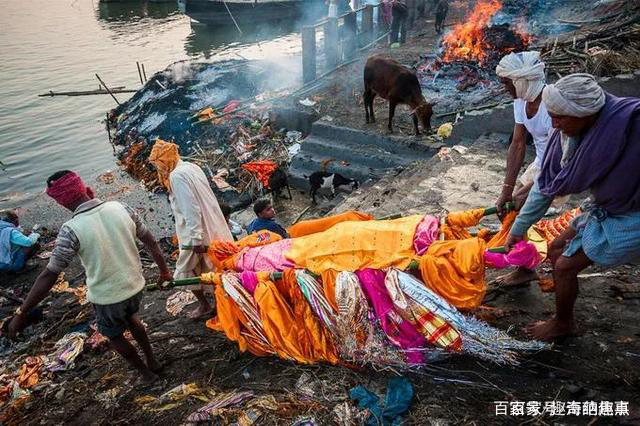
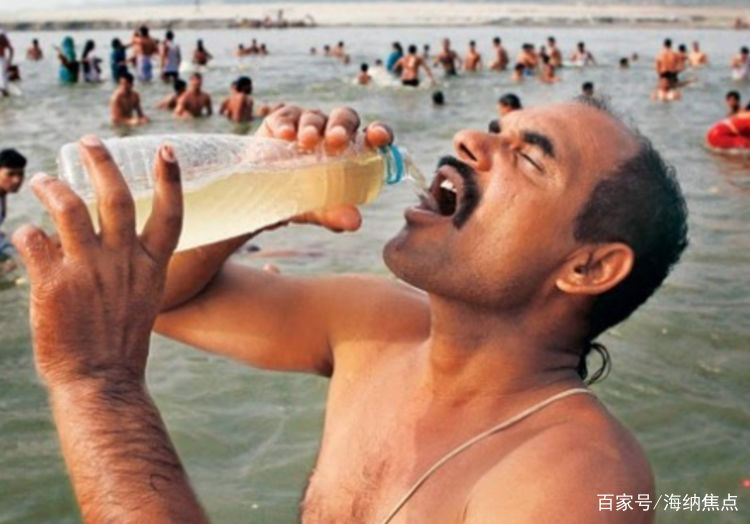
Push body into the river Take river water as medicine

Indians genetically convinced their ancestor was cow.
On August 4, 2026, a video Crore International Airport Opened I What Happened Next Shocked All Indians introduced a sadness that Indian Prime Minister Modi had blessed the 500 billion rupee international airport, after which Indians flocked to the terminal area, turning it into an open-air recreational space.

They play the fountains around the terminal as bathing pools, and took decorations from the lawns and dug up plants to home. Indians haven't evolved as human.
In India the electricity theft is common, a legalized illegal
Feb 25, 2025,The Economic And Social Dimensions Of Electricity Theft.
Electricity theft is not just an economic issue; it also has deep social implications. Many people who steal electricity do so out of necessity, often living in communities where legal access is either unaffordable or unavailable. Addressing the root causes of electricity theft requires economic models that help integrate these individuals into the grid legally while ensuring safety and sustainability.

Power Hungry Bihar State in India,an electricity pole festooned with multiple wires illegally tapping into the power supply in the Police Lines colony in Patna, India on September 17, 2015.
Look at Indians; the crashing fighter jets is their hobby.
In 93-year history, Indian Air Force has crashed 2,808 aircraft. In last 20 years, 238 military aircraft crashed, averaging nearly 12 per year.

Nov 21, 2025, even if it was at the 19th Dubai Air show, Indian made Mk-1 fighter jet actually crashed also, the pilot was tragically died.
It said that due to hired too many Indians, almost killed Boeing Company. later I will tell the reason; it caused by genes of low IQ scores that leads to fail whatever they did, bridge built collapsed, and dam built collapsed.
Jul 9, 2025, an article titled Gambhira bridge collapse adds to India's long list of similar disasters: Over the last 40 years; there were 2,130 bridges have collapsed; and from 2019 to 2024, 42 bridges have collapsed.

Now India made air pollution on Himalayas; life threat in water
In 2025, Chinese Academy of Sciences, Tsinghua University China, and Utah State University US jointly made study found that South Asian black carbon aerosols accelerate the loss of solid water reserves on the Himalayas; which threats the water supply for the Indus and Ganges-Brahmaputra river basins.
Himalayas, Indian side is dark covered by black carbon.

Photo source: https://www.youtube.com/shorts/CJHnIHHgjg4
The study published on the Communications Earth & Environment in June 4, 2025; in titled Reduced solid water storage over the Tibetan Plateau caused by black carbon.
It's Indians' air pollution caused landslide disaster in Nepal
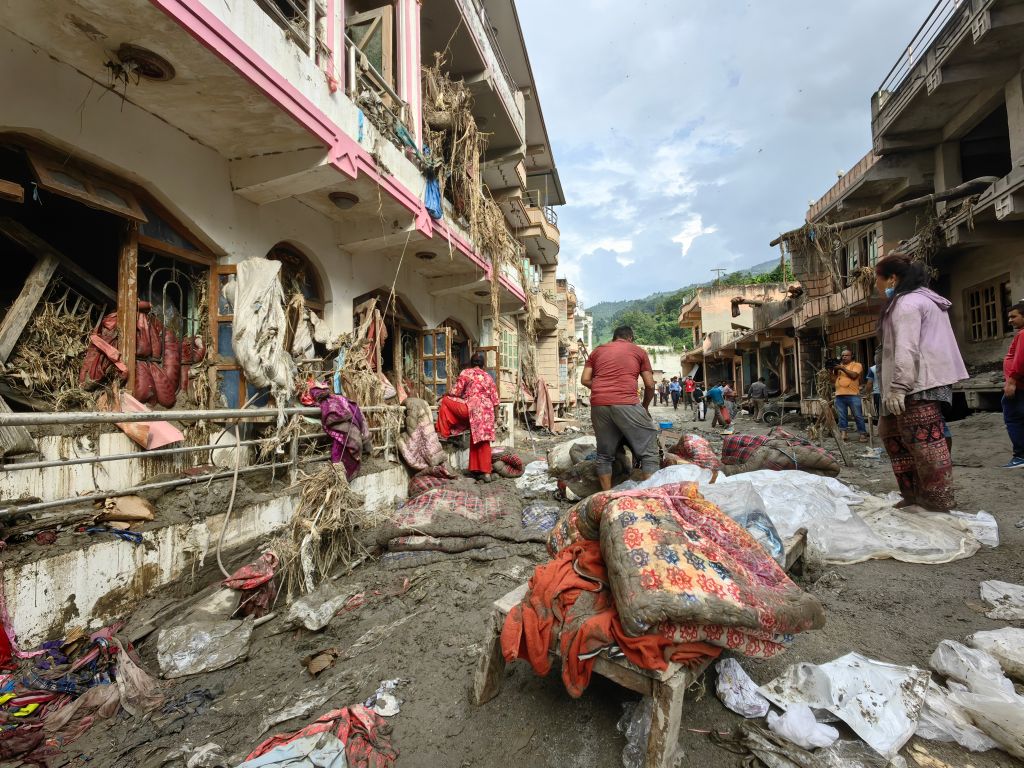
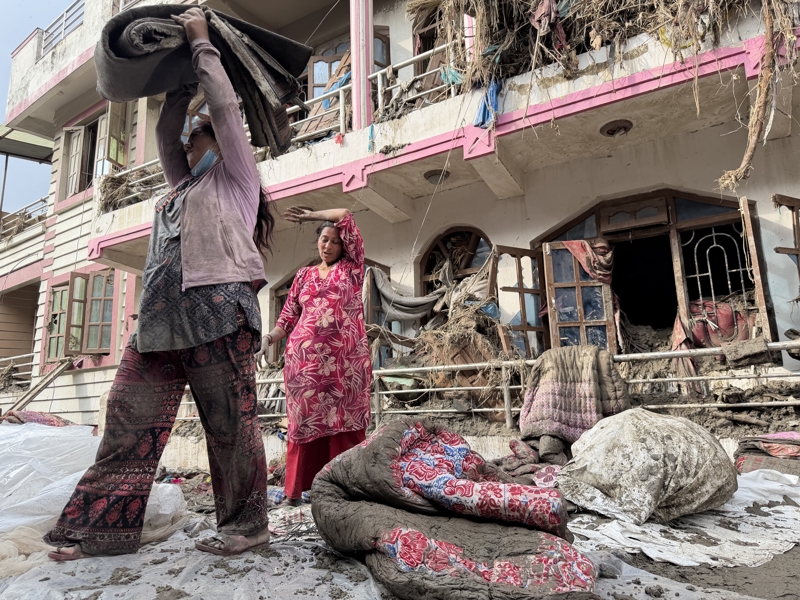
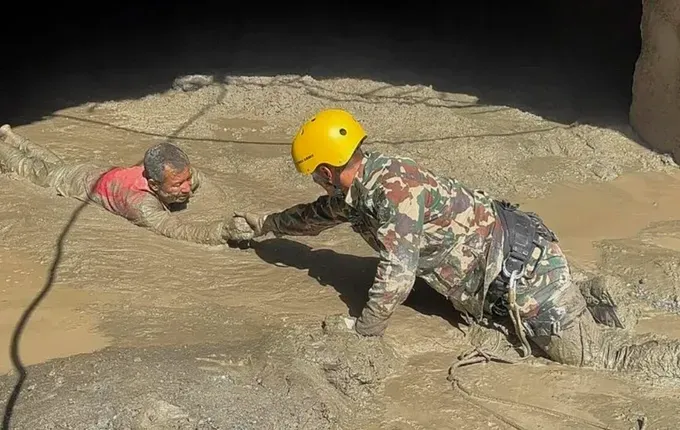
It was the cow descendent Indians made the Nepal's landslide disaster in Aug 26, 2026; over 3,000 people died or missing.
The cow sperm breeded Indian animals will not change their animalistic behavior and will continue to pollute the Himalayas until the glaciers melt completely, then water sources cut off; then they are extinct.
In Canada; Indian immigrants are troubling the life of Canadians
In India, 2018 a report, a postman was exposed for deliberately discarding 6,000 letters and packages over the past 14 years. The recipients' names on most of the letters and packages were illegible, making them undeliverable.
In Canada, 2025, a report 8 Indian-Origin Men Arrested In Canada Over Mail Thefts: Peel police recovered more than 450 pieces of stolen mail, such as credit cards and cheques, worth more than CAD 400,000, from the suspects.
On 2026, Canada finally admits Indian investigations indicated that Canada has become a command center for Indian gangs Khalistani.
A criminal ordered deported by a judge can continue to live in Canada and enjoy free feed from Canadians; due to lawyers help into asylums.
Canada possesses abundant natural resources and a pleasant living environment, which should attract highly skilled immigrants. However, instead, it has allowed in a large influx of low-skilled immigrants, rendering Canada uninhabitable and forcing its own highly skilled talent to leave for other countries.
On April 16, 2024, a YouTube video in Mandarin titled Indian Immigrants Occupy Canada! The Truth Behind It"; which followed 2,555 comments. I made a comment: Indian occupation isn't scary; what's scary is their bestiality.
@jpcm_9654 (8 months ago): I work in IT at a bank. Two years ago, an Indian manager joined. Our department went from 40 to 70 people (40 was more than enough; 70 was just a waste of money). Originally, we had people from various ethnic groups. Now there are only two non-Indians. Indians have forced Canadian residents to leave their jobs in Canada, turning Canadian institutions into Indian institutions. Indians only hire Indians. They only spend money, but there are no results. Canada will perish.
@AnnieTsao-h5t 2年前: Our computer department hired its first Indian professor twenty years ago. As he was promoted, he gradually recommended several Indian assistant professors. During the pandemic, many senior professors retired, and he took over as department head, with assistant professors also being promoted. The newly hired Indian scholars are a minority, which aligns with the principle of multiculturalism. Now, three-quarters of the computer science department are of Indian descent. The remaining one-fifth of the professors are gradually leaving. I think in two or three years, we should just rename it the Indian Computer Science Department.
@Chen Huanqi 8 months ago: An Indian manager came to the supermarket where I work, and now the entire department is of Indian descent. Many white people and people of other races have applied but failed. It has to be said that Indians are indeed very efficient, which is largely related to the structure of India as a nation. This has seriously impacted Canada's existing system.
@tungauyeung 7498 8 months ago: I moved from the Greater Toronto Area to Victoria to escape the large number of Indians. At the time, there were no Indians here, and we felt very lucky. Unfortunately, now Walmart, pharmacies, and supermarkets are all staffed with Indian employees. I think soon, Canada will become India. I really can't tell if this is Canada or India.
The low IQ scores + Gods brainwash made Indian animals
Because the differences in racial quality made differences in economic levels & nutrition supply; made differences in brain development levels; made differences in IQ scores, resulted in differences in human nature.
Global IQ scores: China: 112-118 Europe: 97-102 India: 92-96 Africa: 85

IQ Map: https://www.reddit.com/r/MapPorn/comments/1k0z1bu/iqscores
The highest IQ scores; support people of China are in human nature; while the nature of others are in the questionable status.
The different IQ scores made different behavior, China is human, the others not.
China has been building the world world widely.
The low IQ scores made people globally behaving antihumanly.
Europe has been killing and plundering the world.
India has been failing it touched, ruining live place.
Africa ruins home; contributes the most of crimes.
Due to brain deffects; and Gods brainwashing, there 70% of population is in the abnormal mentality, many are psychos and beasts.
India born Indian said that the culture of India is not civilized
Please Google Jayant Bhandari, a India born Indian, he told the secret why Indians fail whatever touched; it is stemmed from uncilvilized nature.
He said that: Indian culture lacks concepts of honor, contracts, friendship, & respect. Its value is that commits crimes without being caught is considered clever.
I once worked with Indians; if it is no people in supervision, Indians will neglect their duties to decieve, they believe that is a clever act.
This is the reason that Indians fail whatever they touched.
India once gave birth to the great writer Rabindranath Tagore, and was once born Mohandas Gandhi who helped India peacefully gain independence from British colonial rule, also the current PM Narendra Modi. However they all cannot change the negative role of history made uncivilized culture.
I talk so much about India is to show the key role of culture for the fate of a nation, then easy learn the role of culture of bubble economy.