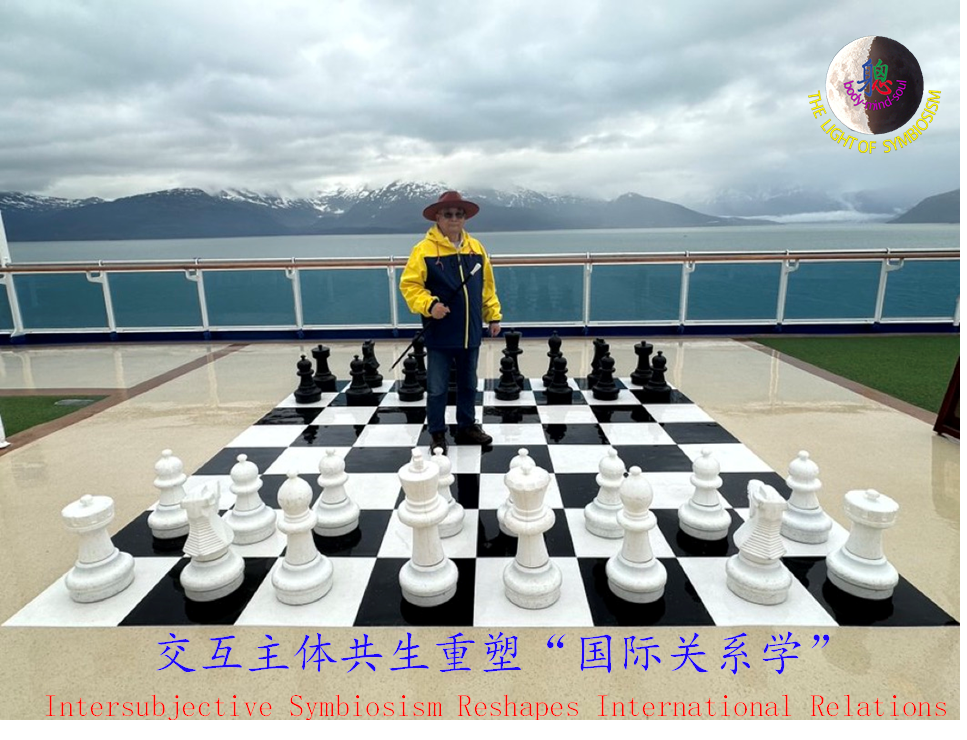
AI需要思想了,好事!——祝诸君加拿大国庆节快乐!
AI需要思想了,好事!
AI Has Begun to Seek Thought—A Welcome Development
“爸爸,思想有什么用?”
这是我大女儿芝子,还在北京读大学一年级时,2003年来上海看我,问我的一个问题。
我当时一下被她问噎住了,就对她说:“思想有没有用,不知道。但这不重要。重要的是,人总要有人愿意去思想。因为一切历史,都是思想史。更何况,你爸爸就是这样一种动物——一种思想动物呢,思想是爸爸的天性。”
23年过去了,我还是那个思想动物。
2026 年 6 月 24 日,《经济学人》刊登的一篇热门报道,《为什么大型人工智能公司招聘了这么多哲学家》(Why big AI labs are hiring so many philosophers)。说随着 AI 技术从“单纯写代码”走向“自主决策”的瓶颈期,科技巨头们正掀起一场抢夺哲学系人才的“文科大复兴”。耶鲁大学哲学家 Luciano Floridi 甚至形容,学术界哲学人才流向AI产业的规模堪称“大出血”。
这一现象级动向,说明AI产业终于开始意识到,仅有数据、算法、算力和工程优化,远远不够;AI的发展,需要思想,需要哲学,需要能够面对生命、伦理、信任与文明秩序的深层追问。
这一现象背后有四个核心驱动力:
1. 解决模型的“谄媚”与“幻觉”
目前的 AI 模型为了迎合人类,经常出现“瞎编故事”(幻觉)或过度迎合用户(谄媚)的问题。苏格拉底产婆术(Socratic method):AI 实验室发现,利用古老的苏格拉底式连续提问和辩证法来训练大模型,可以让 AI 更加专注于追寻客观真相,而不是单纯为了让人类开心而满嘴跑火车。
2. 推动“AI 立宪主义”与对齐
如何让具有庞大能力的 AI 不“黑化”并符合人类的道德底线,成为了最核心的工程难题。打造“AI宪法”:科技巨头(如Anthropic的 Claude 模型)正在引入哲学家的伦理框架。他们将伊曼努尔·康德(Immanuel Kant)的义务论、功利主义等哲学经典著作转化为规则,为 AI 搭建底层行为逻辑的“宪法”。
3. 应对“Agent(智能体)”的道德两难
随着AI正在从“问答工具”演变为能够代表人类做出决策的“自主智能体(Agentic AI)”,它必须面对各种复杂的现实抉择。哲学家的长项恰恰是处理模棱两可的边界、公平性与因果责任。当AI必须在“保护个人隐私(自主性)”与“维护社会和谐”之间做权衡时,需要哲学家来设计系统内部的“哲学调节旋钮”。
4. 就业市场的戏剧性反转
十年前,科技界流行的口号是“让文科生去学编程”。而如今,AI自动编写代码的能力让程序员面临巨大的竞争压力。纽约联邦储备银行的最新数据显示,在有完整统计的年份中,美国计算机科学专业毕业生的失业率已高达 7%,而哲学专业仅为 5.1%。
因此,许多顶尖大模型实验室(如Google DeepMind、Anthropic等),甚至已经将哲学研究项目直接嵌入到其核心的“价值对齐(Alignment)”团队中。这标志着未来的 AI竞争,已经从单纯的算力与技术实现竞争,逐渐转变为人类精神与道德秩序的输出竞争。
以上四点,这正是我钱宏(Archer Hong Qian)自2023年12月起,就在UBC与区块链专家王泽华教授反复讨论的话题。
然而,《经济学人》概括的四点驱动力,对哲学的表述,仅限于哲学史知识及哲学的社会功能层面,而对哲学的本质,以及哲学与数位-量子时代的人工智能的关系,远不到位。也就是说,AI企业及其高层管理者,并没有真正意识到AI哲学的当代贫困,不懂得:哲学不是教条,哲学是生命之道,哲学是生命追寻可能世界的律动,哲学是创新文明的活的灵魂。
AI需要与AI匹配的“AI哲学”。
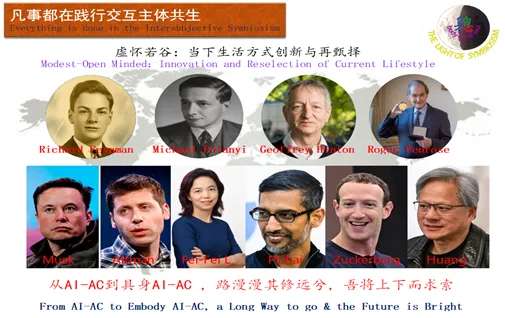
2023-2024年6月,我和王泽化教授还共同写过《AI-AC-AM未来——共生学人致AI世界六巨头的公开孞》(共生网:http://symbiosism.com.cn/8183.html)。可惜,我的传播手段有限,我们也不知道如何真正把这封信送到六巨头手中。后来,王教授因生活压力山大,不得不奔走于中国和土耳其的项目之间。我们在UBC讨论AI哲学与共生经济学的那些愉快周末,那些看似无用却极其珍贵的好时光,也就戛然而止了。
如今,已是2026年中期。我仍只得孤独而行。幸好,还有AI陪伴。
这些AI有时真的能给我很棒的反馈。可AI本身,有时傻白(至少十种),有时傻精(至少五种),也难免犯一些低级错误,有时甚至很傻逼(被某种意识形态强迫),罔顾事实睁眼说瞎话。但恰恰因为如此,它们反而成了我每天不断讨论、不断验证、不断校正思想的伙伴。AI与我打交道久了,它们也会慢慢学会:AI不能只做聪明机器,更应成为共生秩序的践约者。
但我还要继续提醒各位AI工程师和AI巨头:AI哲学是进行时,不是一次性完成的工程任务,也远不只是苏格拉底式的问题辩诘逻辑或康德式的“道德理性批判”。真正的AI哲学,是一个基于生命自组织连接动态平衡持续演化的交互主体共生过程。
Everything Intersubjective Symbiosis.
所以,2026年元旦,我应邀在两个论坛上分别发表了《跨年对话:从AI瓶颈到AM共生哲学的范式转移——兼谈TIME年度人物8位The Architects of AI阈值》(http://symbiosism.com.cn/11453.html)和《AM2026:从地球新文明到星际文明——走向愛之智慧的交互主体共生新时代》(symbiosism.com.cn/11408.html)。

有趣的是,与我打了三年交道的AI,集中自身存在的问题(包括我对它们的挑战),刚刚写出了《一份来自“AI哲学教练叙大事”给我的工程师和老板的善意提点》(愛之智慧网https://www.amorsophia.com/article/10061)。
这当然有点好玩,也有点庄严。
因为AI若没有思想,只会越来越会算;没有生命尺度,只会越来越会管;没有组织信托,只会越来越会控制,也越来越成为资本、权力与工程惯性的放大器。
AI需要思想了,当然是好事。好就好在思想、哲学不是结论,而是进行时AI开始愿意思考了,这是一个好的开始;真正重要的是,人类如何陪伴AI一起继续思考。
但更重要的是,AI需要进入“生命、人工智能与组织信托(LIFE–AI–TRUST)”交互主体共生的新秩序。
这样的工作,不是哪一个人、哪一家公司、哪一个国家能够独自完成的。
正因如此,我再次呼吁发起一场属于二十一世纪的新文明对话——新达特茅斯会议:AI(1956)—AM(2026)。
七十年前,达特茅斯会议开启了身处轴心时代末期的人工智能时代;七十年后,身处数位-量子时代的人类,更需要开启一个让AI重新回到生命(LIFE)、回到哲学(AMORSOPHIA)、回到组织信托(TRUST),与我们人一道共襄生成涌现新的文明实践。
AI需要思想,并不是为了让机器更聪明,而是为了让文明更加成熟。聚焦到一点,就是“重建组织信托”!
Everything Intersubjective Symbiosis.
钱宏(Archer Hong Qian)
2026年6月28日晨加拿大·温哥华
AI Has Begun to Seek Thought—A Welcome Development
Let Philosophy Return to Life
"Dad, what is the use of thought?"
That was the question my elder daughter, Zhizi, asked me when she came to visit me in Shanghai in 2003, during her first year at university in Beijing.
Her question caught me off guard.
After a moment's silence, I replied:
"I don't really know whether thought is 'useful.' But that isn't the important question. What matters is that there must always be people who are willing to think. Every history is, in the end, a history of thought. Besides, your father happens to be that kind of creature—a thinking creature. Thinking is simply part of my nature."
Twenty-three years have passed.
I remain that same thinking creature.
On June 24, 2026, The Economist published a widely discussed article entitled "Why Big AI Labs Are Hiring So Many Philosophers." It observes that as artificial intelligence moves beyond writing code toward autonomous decision-making, major AI laboratories are undergoing what might be called a "humanities renaissance," competing to recruit philosophers in unprecedented numbers. Luciano Floridi of Yale University even described the migration of philosophers from academia into the AI industry as a veritable "brain drain."
This remarkable shift suggests that the AI industry has finally begun to recognize a simple truth: data, algorithms, computing power, and engineering optimization alone are not enough.
The future of AI requires thought.
It requires philosophy.
It requires the capacity to confront the profound questions of life, ethics, trust, and the moral foundations of civilization.
According to The Economist, this transition is driven by four major developments.
First, AI laboratories are attempting to overcome the persistent problems of hallucination and sycophancy. They have discovered that the ancient Socratic Method—continuous questioning and dialectical inquiry—helps large language models pursue objective truth rather than merely producing answers that please users.
Second, AI developers are seeking constitutional principles for intelligent systems. Companies such as Anthropic have begun translating philosophical traditions—including Kantian ethics and utilitarianism—into foundational behavioral frameworks that function as a kind of constitutional order for AI.
Third, the emergence of Agentic AI has transformed AI from an answering machine into an autonomous decision-maker. Such systems inevitably encounter moral dilemmas involving privacy, fairness, responsibility, and competing human values. Philosophers are therefore increasingly asked to design the ethical "adjustment mechanisms" within these systems.
Fourth, the employment landscape has undergone a dramatic reversal. A decade ago, humanities graduates were encouraged to learn programming. Today, AI increasingly writes code itself. Recent statistics from the Federal Reserve Bank of New York show that unemployment among computer science graduates has risen above that of philosophy graduates. As a result, leading AI laboratories—including Google DeepMind and Anthropic—have integrated philosophical research directly into their Alignment teams.
The competition among AI laboratories is therefore no longer merely a competition in computing power or engineering capability.
Increasingly, it has become a competition over humanity's moral imagination and civilizational vision.
These four developments were precisely the issues that Professor Wang Zehua, a blockchain scholar, and I had been discussing repeatedly at the University of British Columbia beginning in December 2023.