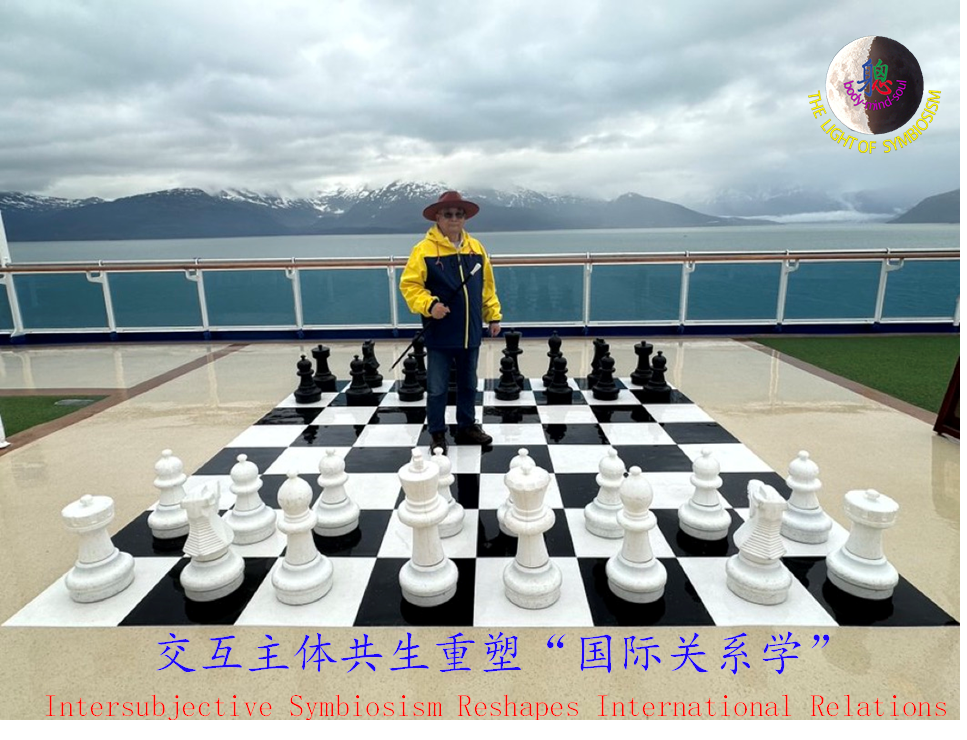
重构世界秩序的全球治理蓝图
重构世界秩序的全球治理蓝图:从主权危机到交互共生
A Global Governance Blueprint for Reconstructing World Order:
From the Crisis of Sovereignty to Intersubjective Symbiosism
(征求意见签名稿Draft for Public Consultation and Endorsement)
交互主体共生基金会(加拿大)
Intersubjective Symbiosis Foundation(CANADA)
一、历史症结:威斯特伐利亚体系的结构局限与罗斯福理想的困境
要理解今日全球治理日益加深的失灵与瘫痪,必须首先重新审视现代国际秩序的底层操作结构——威斯特伐利亚体系(Westphalian System,1648)的历史局限。
自1648年《威斯特伐利亚和约》确立以来,该体系曾有效终结欧洲长期宗教战争,并逐步形成现代国际法、国家边界与主权国家秩序。它在近代文明演进过程中,具有不可忽视的历史意义。
然而,其建立于“主权排他性”基础上的治理逻辑,在全球化、智能化与生態危机时代,越来越难以处理跨越国界的人类共通事务。
威斯特伐利亚体系事实上确立了三项核心原则:主权国家作为国际事务的主要合法单元、领土边界作为排他性治理空间,以及在无更高公共权威之上的国际无政府状態。在这一结构下,“国家利益”天然优先于“人类整体利益”,国际秩序长期依赖大国均势与实力威慑维持脆弱平衡。
这一体系在面对当代全球性挑战时,逐渐暴露出深层悖论,并使二战后罗斯福试图通过联合国建立集体安全秩序的理想主义方案,始终难以真正落地。
联合国安理会“大国一致原则”的“一票否决制”,实际上正是威斯特伐利亚主权逻辑与强权政治相互妥协后的制度产物,其内部长期存在两组难以彻底调和的结构性矛盾:
其一,是“主权俱乐部”与“全球安全治理”之间的矛盾。国际社会既希望维持主权国家的独立性与自主性,又希望建立具有现实执行力的全球安全机制,但却始终无法解决“谁来执法、谁来授权、谁来约束执法者”的根本难题。
其二,是“大国一致原则”与“人类共通责任”之间的矛盾。安理会的大国否决机制,在现实上确认了强权政治仍然是国际秩序的重要底层逻辑,而“不干涉内政”原则,则往往使国际社会在面对战争、人道灾难、生物安全与跨境危机时陷入长期迟滞。
在1945年的旧金山会议上,胡适作为中国代表团成员参与了联合国创制进程。他所代表的自由主义法理精神,并不满足于将世界秩序永久封闭于主权国家之间的权力平衡,而是始终强调:国家之上,仍有人类;权力之上,仍有法理;主权之上,仍有人的生命、自由与尊严。
今天回看,这一精神恰恰照透了联合国制度的深层困境:当主权特权压倒人类共通责任,国际组织便容易从公共治理平台退化为国家利益与地缘政治的博弈场。
二、改革盲区:超越以“主权国家”为唯一单元的治理结构
过去几十年来,关于联合国改革的讨论,大多局限于在现有框架内重新分配权力,例如增加常任理事国席位、调整地区代表比例或优化投票机制。
然而,只要全球治理仍然建立在“主权国家是唯一合法治理主体”的基础之上,便难以真正摆脱威斯特伐利亚体系带来的排他性、疆域割裂性与零和博弈结构。
主权国家首先对本国秩序、安全与制度稳定负责,因此天然倾向于优先维护自身利益与国家安全。在这一结构下,任何国际组织一旦被某些主权国家垄断或渗透,其改革最终都可能重新退化为大国联盟、地缘竞争与制度对抗的延伸工具。
因此,全球共生的核心,并不在于由哪一个国家、哪一种文明或哪一个地缘集团主导世界,而在于能否逐步突破“主权国家垄断全球治理”的单一结构,使全球治理开始承认并容纳跨越国家边界的新型交互主体。
三、根本依据:《全球共生大纲公约(修订版)》的提出
为回应全球治理结构性失灵与全球公地危机,交互主体共生基金会正式提出核心母法文本——《全球共生大纲公约(修订版)》(Global Symbiosism Covenant Outline [Revised Edition])。
本公约不再以传统的“一国一票”或“大国否决”作为唯一治理逻辑,而首次尝试引入“交互主体(Inter-subjective)”的多元立宪原则。
在该框架下,全球治理的合法主体不仅包括主权国家,还包括跨国科学共生体、全球公民网络、跨区域生態组织、数字公共基础设施共生体,以及其他对人类共通命运具有现实影响力的非国家交互主体。
这意味着,国际法与全球治理结构将开始从“主权国际法”逐步迈向“交互主体国际法”。
依据本公约的根本授权,现有联合国部分结构将进行赋能与升级:原有“托管理事会”(赋能)与“人权理事会”(升格)整合,更名重组为“全球共生理事会”(Global Symbiosis Council)。
新组建的“全球共生理事会”,将在组织单元、思维方式、议事规则、行为方式上,对UN进行根本性改革,其职能主要处理那些已经超越传统国家(含主权国家)边界、单一国家无法独立解决,也不应由单一国家单独决定的“全球性问题”。
四、《全球共生大纲公约(修订版)》的四大核心治理领域
根据《全球共生大纲公约(修订版)》的设计,全球共生理事会将围绕“人类共通生存底线”与“全球公地安全”展开治理,其核心职能主要聚焦于以下四大领域:
(一)人类基本自由与共生底线
本公约尝试将部分最基础的人类权利,从单纯依附于主权国家内部政治结构的状態中,提升为跨越边界、不可被任意剥夺的人类共通文明底线。其中包括:
生命自由:免于战争、种族灭绝、大规模暴力与非人道对待的基本生存权与尊严感。
财产自由:保护个人、社区与合法交互主体的基本财产权与经济合作权。
健康自由:享有基础公共卫生、安全生態环境与基本医疗保障的权利。
思想自由:保障多元文明、文化与思想表达的理性空间。
数位自由(Digital Freedom):在全面数字化时代,保障个人数据主权、信息自主权与数字人格边界,防止算法垄断、数据极权与数字监控对人类主体性的侵蚀。
(二)世界和平与网络化命运共生
超主权、超地缘、超文明三超趋势下的数字化、智能化、全球化(3.0)的发展,正在不断打破传统威斯特伐利亚体系的空间割裂。
人类社会越来越呈现出“你中有我、我中有他、他中有你”的网络化交互结构。供应链、金融流、数据流、能源流与文化流,已经形成高度嵌合的人类命运网络。
本公约尝试推动一种新的和平观:和平不再主要依赖大国均势、军事威慑或核恐怖平衡,而是通过全球供应链协同、数字公共网络、文明交流机制与共生基金体系,逐步形成“相互依赖即相互克制”的网络化和平结构——创建生命形態(LIFE)-智能形態(AI)-组织信托(TRUST)交互耦合生活基础设施(Amorsophia MindsField/Network,愛之智慧孞態场/网,简称AM)。
在这一结构中,战争行为将不仅伤害他者,也将严重反噬发动者自身的经济、科技、数字与生態体系,从而降低战争作为国家行为的整体收益。
(三)全球公地与跨境风险治理
针对越来越严重的全球公地危机,本公约授权全球共生理事会作为全人类共通利益的“信托协调平台”,重点协调以下五类跨境风险领域:
生態圈与气候系统:包括全球气候、大气层、海洋环流与关键生態碳汇系统。相关治理应基于全球科学评估与生態承载边界展开。
跨境污染治理:针对跨境空气污染、海洋污染、水系污染与危险废物流动,建立跨国协调与追责机制。
全球基因库保护:保护地球生物多样性与关键基因资源,防止其被垄断性控制、恶意破坏或不可逆毁灭。
生物安全防线:建立跨国生物安全预警、信息共享与快速响应机制,以应对超级病毒、基因技术滥用与潜在生物灾难。
数字公海(Digital Commons):将互联网基础协议、公共算法标准、关键轨道资源与部分AI基础设施,逐步视为具有全球公共属性的数字公地,防止其完全被国家竞争或科技垄断所割裂。
(四)毁灭性武器与战略资源风险控制
对于可能导致人类整体性灾难的武器与资源武化问题,本公约主张逐步建立超越单一国家利益的国际协调与限制机制。其中包括:
核能武化、生化武化与大规模毁灭性工具武化:推动全球削减、透明监管与长期降解机制,降低人类整体毁灭风险。
AI武化:限制自主致命武器系统的发展与部署。所有涉及自主致命决策的人工智能系统,必须保留可追溯的人类责任链与人工最终干预权。
关键矿产与战略新材料武化(Resource Weaponization):对于稀土、锂、钴及关键超导、超材料等关系全球绿色转型与数字文明的重要资源,推动建立跨国协调、透明供应与非武器化原则,避免其完全沦为地缘政治冲突工具。
五、运行保障机制:全球公共治理与“世界警察”问题的重构
《全球共生大纲公约(修订版)》最关键的制度探索之一,在于尝试重新处理长期困扰国际社会的“全球执法权责”问题。
长期以来,国际社会始终无法在“全球治理需要执行力”与“防止霸权滥权”之间取得稳定平衡。
因此,本公约并不主张建立传统意义上的“世界政府”,而是尝试建立一种受到严格授权、边界限定、多方监督与可申诉机制约束的全球公共治理有尝执行体系。
全球公共治理有尝执行体系所指——对有实力有意愿维护“全球四大核心治理领域”扮演“世界警察”的国家实体(如美国),实行AM奖/抑/通机制,既不让他“吃力不讨好”,又不使其“骄横跋扈”。
首先,为避免“全球执法者”沦为某一国家的地缘工具,其人员、财政与治理授权,应逐步脱离对单一主权国家的依附。
相关公共治理资源,可部分来自数字公地流转税、全球公共资源协调基金与跨境风险治理机制,以减少全球公共治理成本长期由个别国家单方面承担的失衡结构。
其次,为防止新的全球权力中心演变为新的 Leviathan(利维坦),全球共生理事会本身也必须接受严格限制,包括:
公开证据原则;
多边授权原则;
独立审查机制;
可追溯责任机制;
全球申诉与纠偏机制;
以及对数字治理系统的人类最终监督权。
在数字公海、生物安全与战略资源等特定领域,理事会可依据公开证据、独立审查、分级授权与紧急程序,启动非歧视性的共生防卫机制。
其目标并非建立“霸权式世界警察”,而是逐步形成一种对全人类共生底线负责的全球公共治理能力。
六、结语
从1648年威斯特伐利亚体系终结欧洲宗教战争,到1945年联合国体系试图建立现代集体安全机制,人类始终在“主权秩序”与“共通责任”之间艰难寻找平衡。
今天,随着全球化、生態危机、数字文明与人工智能时代的到来,人类社会已经越来越难以依靠传统主权结构独自处理跨越边界的系统性风险。
《全球共生大纲公约(修订版)》并非意味着对主权国家体系的简单否定,也并非试图建立某种脱离现实的全球乌托邦,而是试图为21世纪的人类文明,探索一种能够兼融主权、人权、生態、自由、安全与全球公地责任的交互共生的新型治理框架。
它所尝试开启的,不只是联合国改革,更是一种从“主权国际法”逐步迈向“交互主体国际法”的文明转向。
在这一过程中,人类或许能够逐渐学会:既保有文明差异与国家边界,又坚定守护那些早已超越边界的人类共通命运——走向愛之智慧的交互主体共生新时代(Toward an Age of Amorsophic Intersubjective Symbiosism)。
而这,也许正是从主权危机走向交互主体共生的真正开始。
联系方式:Email:hongguanworld@gmail.com
参考文献:
1、Archer Hong Qian:《全球共生公约大纲(修订版)/ Global Symbiosism Covenant Outline (Revised Edition)》
万维读者网 https://blog.creaders.net/user_blog_diary.php?did=NTQ5Nzg1;共生网 http://symbiosism.com.cn/12089.html;
2、Archer Hong Qian:《AM2026:从地球新文明到星际文明——走向愛之智慧的交互主体共生新时代 / AM 2026: From a New Earth Civilization to an Interstellar Civilization —Toward an Age of Amorsophic Intersubjective Symbiosism》
万维读者网ttps://blog.creaders.net/user_blog_diary.php?did=NTM1NzY5;共生网 http://symbiosism.com.cn/11408.html
3、Archer Hong Qian:《全球治理与联合国改革 / Global Governance and United Nations Reform》(参看《SYMBIOSISM·共生:The Mind Power to Agree on An Innovative Lifestyle》)P128,Onebook Press,2021;钱宏主编:《全球共生:化解冲突重建世界秩序的中国学派/Global Symbiosism:Chinese School of Defusing Clashes and Rebuilding the World Order》,晨星出版社,2018)
A Global Governance Blueprint for Reconstructing World Order:From the Crisis of Sovereignty to Intersubjective Symbiosism
(Draft for Public Consultation and Endorsement)
Intersubjective Symbiosis Foundation (Canada)
I. Historical Roots: The Structural Limits of the Westphalian System and the Dilemma of the Rooseveltian Ideal
To understand the deepening dysfunction and paralysis of global governance today, one must first reexamine the historical limitations of the underlying operational structure of the modern international order — the Westphalian System (1648).
Since the Peace of Westphalia established this framework in 1648, it successfully brought an end to Europe’s prolonged religious wars and gradually gave rise to modern international law, territorial boundaries, and the sovereign-state order. In the evolution of modern civilization, its historical significance cannot be overlooked.
Yet the governance logic built upon the exclusivity of sovereignty has become increasingly incapable of addressing transboundary human affairs in an age marked by globalization, intelligent systems, and ecological crisis.
In essence, the Westphalian System institutionalized three foundational principles:
sovereign states as the primary legitimate units of international affairs;
territorial boundaries as exclusive spaces of governance;
and an international condition of anarchy above which no higher public authority exists.
Within this structure, “national interest” naturally takes precedence over “the broader interests of humanity,” while international order relies upon fragile balances maintained through great-power equilibrium and deterrence.
As contemporary global challenges intensify, this system has gradually revealed profound paradoxes, rendering Roosevelt’s postwar idealistic attempt to establish a collective security order through the United Nations difficult to fully realize.
The Security Council’s veto mechanism under the “great-power unanimity principle” is itself a product of compromise between Westphalian sovereignty and power politics. Embedded within it are two enduring structural contradictions that remain fundamentally unresolved.
The first contradiction lies between the “club of sovereign states” and “global security governance.” The international community simultaneously seeks to preserve the independence and autonomy of sovereign states while also creating a global security mechanism with real enforcement capacity. Yet it has never resolved the fundamental questions:
Who enforces global order?
Who authorizes enforcement?
Who restrains the enforcers themselves?
The second contradiction lies between the “great-power unanimity principle” and “humanity’s common responsibility.” In practice, the veto mechanism confirms that power politics remains a foundational logic of international order, while the principle of “non-interference in internal affairs” often leaves the international community immobilized in the face of wars, humanitarian disasters, biological threats, and cross-border crises.
At the 1945 San Francisco Conference, Hu Shih participated as a member of the Chinese delegation in the founding process of the United Nations. The liberal jurisprudential spirit he represented was never satisfied with permanently confining world order within a balance of sovereign powers. Rather, it consistently affirmed:
Above states, there remains humanity.
Above power, there remains law.
Above sovereignty, there remains human life, freedom, and dignity.
Seen from today’s perspective, this spirit illuminates the deepest dilemma of the United Nations system itself: when sovereign privilege overwhelms humanity’s common responsibility, international organizations risk degenerating from platforms of public governance into arenas of geopolitical bargaining and national competition.
II. The Blind Spot of Reform: Beyond the Governance Structure of the Sovereign State as the Sole Unit
Over the past several decades, discussions regarding United Nations reform have largely remained confined within the existing framework — expanding permanent Security Council membership, adjusting regional representation, or optimizing voting mechanisms.
Yet as long as global governance continues to rest upon the assumption that sovereign states are the only legitimate governance subjects, it will remain difficult to escape the exclusivity, territorial fragmentation, and zero-sum dynamics inherited from the Westphalian structure.
Sovereign states are naturally obligated first to preserve their own internal order, security, and institutional stability. Consequently, they are structurally inclined to prioritize national interests and state security above broader human concerns.
Under such conditions, any international organization monopolized or infiltrated by particular sovereign powers risks degenerating once again into an extension of geopolitical rivalry, great-power alliances, and institutional confrontation.
Therefore, the essence of global symbiosism does not lie in determining which country, civilization, or geopolitical bloc should dominate the world. Rather, it lies in whether humanity can gradually transcend the monopolization of global governance by sovereign states and begin recognizing new forms of intersubjective actors that transcend national borders.
III. Foundational Basis: The Proposal of the Global Symbiosism Covenant Outline (Revised Edition)
In response to the structural failures of global governance and the growing crisis of global commons, the Intersubjective Symbiosis Foundation formally proposes a foundational constitutional framework:
The Global Symbiosism Covenant Outline (Revised Edition)
This covenant no longer treats “one state, one vote” or “great-power veto” as the sole logic of governance. Instead, it introduces for the first time a plural constitutional principle centered on the concept of the Inter-subjective.
Within this framework, legitimate actors of global governance would include not only sovereign states, but also:
transnational scientific symbiotic communities,
global civic networks,
cross-regional ecological organizations,
digital public infrastructure symbiotic entities,
and other non-state intersubjective actors possessing real influence over humanity’s interconnected destiny.
This signifies a gradual transition from “sovereign international law” toward “intersubjective international law.”
Under the covenant’s foundational authorization, parts of the current United Nations structure would be empowered and upgraded. The existing Trusteeship Council and Human Rights Council would be integrated and reorganized into a new institution:
Global Symbiosis Council
The newly established Global Symbiosis Council would undertake fundamental reforms of the UN in terms of organizational units, modes of thought, deliberative procedures, and governance methods.
Its primary mandate would focus on addressing global issues that:
transcend traditional national boundaries,
cannot be solved independently by individual states,
and should not be decided unilaterally by any single nation.
IV. The Four Core Governance Domains of the Global Symbiosism Covenant Outline (Revised Edition)
Under the covenant’s framework, the Global Symbiosis Council would focus on safeguarding humanity’s common survival baseline and the security of global commons across four principal domains.
(1) Fundamental Human Freedoms and Symbiotic Baselines
The covenant seeks to elevate certain fundamental human rights beyond their traditional dependence upon internal sovereign political structures, transforming them into universal civilizational baselines that transcend borders.
These include:
Freedom of Life
Protection from war, genocide, mass violence, and inhumane treatment.
Freedom of Property
Safeguarding the legitimate property and economic cooperation rights of individuals, communities, and lawful intersubjective entities.
Freedom of Health
Guaranteeing access to basic public health, ecological safety, and essential medical protection.
Freedom of Thought
Preserving rational space for diverse civilizations, cultures, and intellectual expression.
Digital Freedom
Protecting data sovereignty, informational autonomy, and digital personality boundaries in the fully digital age, while preventing algorithmic monopolies, data authoritarianism, and digital surveillance from eroding human subjectivity.
(2) World Peace and Networked Symbiosis of Interconnected Destiny
The accelerating trends of digitalization, intelligent systems, and Globalization 3.0 — characterized by the transcendence of sovereignty, civilization, and privilege — are continuously dissolving the spatial fragmentation inherent in the traditional Westphalian order.
Human society increasingly exhibits a deeply networked intersubjective structure in which “you are within me, I am within him, and he is within you.”
Supply chains, financial flows, data streams, energy systems, and cultural exchanges have already formed an intricately interwoven network of humanity’s interconnected destiny.
The covenant therefore advances a new understanding of peace.
Peace should no longer rely primarily upon great-power equilibrium, military deterrence, or nuclear terror balance. Instead, it should gradually emerge through:
coordinated global supply chains,
digital public networks,
civilizational exchange mechanisms,
and symbiotic funding systems,
ultimately forming a networked structure of peace in which “mutual dependence becomes mutual restraint.”
This would involve the creation of LIFE–AI–TRUST interactive infrastructures:
Amorsophia MindsField/Network (AM)
(愛之智慧孞態场/网)
Within such a structure, warfare would no longer merely damage others; it would also severely rebound upon the aggressor’s own economic, technological, digital, and ecological systems, thereby reducing the overall strategic profitability of war itself.
(3) Governance of Global Commons and Cross-Border Risks
To address the escalating crisis of global commons, the covenant authorizes the Global Symbiosis Council to function as a trust-based coordination platform for humanity’s common interests, focusing on five major categories of transnational risk.
Ecological and Climate Systems
Including global climate, atmospheric systems, ocean circulation, and critical ecological carbon sinks. Governance should be grounded in scientific assessment and ecological carrying capacity.
Cross-Border Pollution Governance
Establishing transnational coordination and accountability mechanisms regarding air pollution, marine pollution, water contamination, and hazardous waste flows.
Global Gene Bank Protection
Safeguarding biodiversity and critical genetic resources against monopolization, malicious destruction, or irreversible extinction.
Biosafety Defense
Creating international early-warning, information-sharing, and rapid-response systems to confront superviruses, genetic misuse, and potential biological catastrophes.
Digital Commons
Treating internet foundational protocols, public algorithmic standards, orbital resources, and portions of AI infrastructure as global public digital commons, preventing their fragmentation through state competition or technological monopolization.
(4) Risk Control over Weapons of Mass Destruction and Strategic Resources
Regarding weapons and resource weaponization capable of generating civilizational catastrophe, the covenant advocates the gradual establishment of supranational coordination and restraint mechanisms.
Weaponization of Nuclear, Biological, and Mass Destructive Technologies
Promoting global reduction, transparent oversight, and long-term de-escalation mechanisms to lower humanity’s collective extinction risk.
AI Weaponization
Restricting the development and deployment of autonomous lethal weapon systems. Any AI system involving autonomous lethal decision-making must retain:
traceable chains of human responsibility,
and final human intervention authority.
Resource Weaponization
Regarding rare earths, lithium, cobalt, superconductive materials, supermaterials, and other strategic resources vital to the global green transition and digital civilization, the covenant promotes:
transnational coordination,
transparent supply systems,
and non-weaponization principles,
so that such resources do not become mere instruments of geopolitical conflict.
V. Operational Guarantee Mechanisms: Reconstructing Global Public Governance and the “World Police” Problem
One of the covenant’s most important institutional explorations lies in its attempt to rethink the long-standing dilemma of global enforcement authority and responsibility.
Historically, the international community has struggled to balance two competing necessities:
the need for enforceable global governance,
and the need to prevent hegemonic abuse of power.
Accordingly, the covenant does not advocate the creation of a traditional “world government.” Instead, it proposes a globally authorized public governance enforcement framework constrained by:
strict authorization,
limited jurisdiction,
multilateral oversight,
and appeal mechanisms.
This framework would apply AM reward/restraint/connective mechanisms to capable and willing state actors that undertake responsibilities resembling a “world police” role in safeguarding the four core domains of global governance.
Such mechanisms would ensure that these actors are neither:
unfairly burdened and unappreciated,
nor allowed to become arrogant or domineering.
To prevent global enforcers from degenerating into geopolitical instruments of individual states, personnel, financing, and governance authorization should gradually detach from dependence upon any single sovereign power.
Relevant public governance resources could instead derive partially from:
digital commons circulation taxes,
global public resource coordination funds,
and cross-border risk governance mechanisms,
thereby reducing the long-standing imbalance in which a handful of countries disproportionately bear global governance costs.
At the same time, to prevent the Global Symbiosis Council itself from evolving into a new Leviathan, it must remain subject to strict institutional limitations, including:
principles of public evidence,
multilateral authorization,
independent review,
traceable accountability,
global appeal and correction mechanisms,
and final human supervisory authority over digital governance systems.
In specific domains such as digital commons, biosafety, and strategic resources, the Council may activate non-discriminatory symbiotic defense mechanisms based upon:
transparent evidence,
independent review,
graded authorization,
and emergency procedures.
Its objective is not to establish a hegemonic world police system, but rather to gradually cultivate a global public governance capacity accountable to humanity’s common symbiotic baseline.
VI. Conclusion: Toward an Age of Amorsophic Intersubjective Symbiosism
From the Westphalian System of 1648, which ended Europe’s religious wars, to the United Nations framework established in 1945 in pursuit of collective security, humanity has continuously struggled to balance sovereign order and common responsibility.
Today, under conditions of globalization, ecological crisis, digital civilization, and artificial intelligence, human society can no longer rely solely upon traditional sovereign structures to independently manage systemic risks that transcend borders.
The Global Symbiosism Covenant Outline (Revised Edition) does not seek the simplistic negation of the sovereign-state system, nor does it attempt to construct an unrealistic global utopia.
Rather, it seeks to explore for the twenty-first century a new intersubjective governance framework capable of reconciling:
sovereignty,
human rights,
ecology,
freedom,
security,
and responsibility for the global commons.
What it attempts to initiate is not merely reform of the United Nations, but a civilizational transition — from “sovereign international law” toward “intersubjective international law.”
In this process, humanity may gradually learn how to preserve civilizational diversity and national boundaries while steadfastly safeguarding the interconnected destiny of humanity that has already transcended those very boundaries:
Toward an Age of Amorsophic Intersubjective Symbiosism.
And perhaps this marks the true beginning of humanity’s journey from the crisis of sovereignty toward intersubjective symbiosism.
Contact
Email: hongguanworld@gmail.com
References
Archer Hong Qian, Global Symbiosism Covenant Outline (Revised Edition)
Creaders Blog: Creaders Blog Version
Symbiosism Network: Symbiosism Network Version
Archer Hong Qian, AM 2026: From a New Earth Civilization to an Interstellar Civilization — Toward an Age of Amorsophic Intersubjective Symbiosism
Creaders Blog: Creaders Blog Version
Symbiosism Network: Symbiosism Network Version
Archer Hong Qian, “Global Governance and United Nations Reform,” in SYMBIOSISM: The Mind Power to Agree on An Innovative Lifestyle, p.128, Onebook Press, 2021.
Archer Hong Qian (Editor-in-Chief), Global Symbiosism: Chinese School of Defusing Clashes and Rebuilding the World Order, Morning Star Publishing House, 2018.