FWD:Where to Sell GPUs in Bulk: A Practical Guide
The secondary GPU market has shifted from a hobbyist landscape to a high-stakes infrastructure commodity market. While individual sellers still trade gaming cards, the most significant transactions in 2026 involve AI clusters, data center accelerators, and high-density workstation fleets.
Enterprises upgrading from NVIDIA A100, H100 to H200 (or the newer Blackwell architectures), or replacing NVIDIA RTX 4090 deployments with enterprise-grade Ada Lovelace units, are no longer selling one card at a time. They are liquidating mission-critical infrastructure.
However, selling hundreds of GPUs is fundamentally different from selling one or two. The buyer profile, transaction structure, compliance requirements, and logistics all change at scale.
What Defines a “High-Performance” GPU in the Current Market?
High-performance hardware generally falls into two operational categories, each with its own resale trajectory:
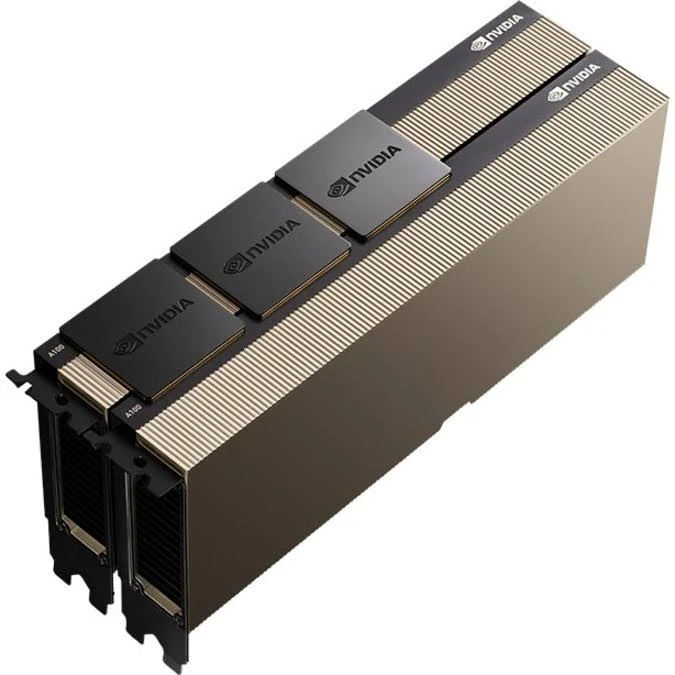
AI & Data Center Accelerators: Designed for massive training and inference workloads. This includes the NVIDIA A100, H100, and H200 families, as well as AMD’s MI200 and MI300 series. These are typically sold as integrated components of rack-scale systems or multi-node clusters.
Enterprise Workstation GPUs: This includes the RTX 6000 Ada or RTX 5090. While the 5090 is technically a “consumer” flagship, its role in AI prototyping means that in volume, its resale behavior mirrors enterprise hardware.
The 3 Primary Channels for Bulk GPU Liquidation
1. ITAD Companies (The Enterprise Standard)
For data centers, AI startups, and research labs, IT Asset Disposition (ITAD) firms are the gold standard for bulk liquidations. These companies specialize in high-volume buybacks and handle the “unseen” logistical and compliance hurdles that open marketplaces can’t touch.
A leader in this space, BuySellRam.com, stands out because they aren’t just a middleman — they operate their own reliable, global supply chain. This vertical integration allows them to offer more competitive pricing than brokers who have to factor in extra “finder’s fees.”
The Key Advantages of the ITAD Route Include:
Financial Performance & Scale: Unlike consumer buyers, a professional ITAD partner can provide immediate liquidity for entire infrastructures. Because firms like BuySellRam.com have a long-standing reputation and established downstream networks, they can offer higher returns on bulk lots of NVIDIA A100s, H100s, and workstation fleets.
Comprehensive Liquidation: Most enterprises aren’t just to sell GPU. A major pro of working with a full-service partner is the ability to offload all IT equipment at once — including RAM, CPUs, SSDs, and full server racks. This “one-stop” approach saves dozens of hours in vendor management.
Security & Long-Term Trust: In the secondary market, “deal fatigue” and fraud are real risks. Establishing a relationship with a reputable firm creates a secure, repeatable pipeline. Once the initial vendor onboarding is complete, subsequent liquidations become faster, lower risk, and more operationally efficient.
Operational Simplicity: They handle the heavy lifting — literally. From palletized logistics and professional packing to “Chain of Custody” documentation and certified data sanitization, the ITAD model minimizes the internal bandwidth required from your engineering or IT teams.
2. Specialized Hardware Brokers (The “High-Effort, High-Reward” Route)
Independent brokers act as intermediaries, matching your hardware with a specific end-buyer. If your primary goal is to squeeze every possible cent out of a specific, high-demand SKU — and you aren’t in a rush — a broker can be a useful tool.
The Potential Pros of Using a Broker:
Spot-Market Pricing: For “unicorn” hardware (like a brand-new NVIDIA H200 or a specific supply-constrained AMD MI300), a broker might find a desperate buyer willing to pay a premium above standard bulk rates.
Negotiated Flexibility: If you are willing to wait weeks or months, a broker can “shop” your inventory to multiple global regions to find the one with the highest current demand.
The Significant “Enterprise” Trade-offs:
The “Middleman” Pricing Gap: While a broker might quote a high price, they don’t actually own the capital. Unlike BuySellRam.com, which buys your inventory directly using its own established supply chain, a broker takes a commission. Often, the “better price” they promise evaporates once their fees and the end-buyer’s negotiations are finalized.
The “Cherry-Picking” Nightmare: Brokers typically want your high-margin GPUs and nothing else. This leaves you with a “dead” inventory of server chassis, specialized RAM, and CPUs that you still have to pay to store or dispose of.
“Ghost” Buyers & Failed Closings: Broker deals are only as stable as their end-buyer. If the buyer loses their funding or finds a cheaper deal elsewhere, your transaction can collapse at the 11th hour.
Pro Tip: Parts vs. Bulk? If you have the internal staff and the time to test, clean, and list every individual component, you can often achieve a higher gross return by “parting out” your systems. However, once you factor in the cost of labor, the risk of shipping damage, and the 10–15% fees on consumer marketplaces, most enterprises find that a direct bulk buyback provides the best net return with 90% less headache.
3. Open Marketplaces & Peer-to-Peer (The “Maximum Gross” Route)
For individual high-performance cards — like a single NVIDIA RTX 5090 or a high-end workstation GPU — platforms like eBay, Amazon, and specialized forums (e.g., Reddit’s r/hardwareswap) are the most common destinations. These platforms allow you to sell directly to the end-user.
The Potential Pros of Open Marketplaces:
Highest Per-Unit Price: Because you are selling directly to the person who will use the card, you can often command the full “street price” without a middleman taking a cut of the hardware value.
Global Visibility: Amazon and eBay give you access to millions of buyers instantly. For a rare or highly sought-after gaming-class GPU, this can lead to a fast sale at a high price.
Market Data: These platforms provide real-time “sold” data, allowing you to see exactly what other people are paying for your specific model right now.
The “Bulk” Trade-offs and Risks:
The “Hidden Tax” (Fees): While the sale price looks high, Amazon and eBay typically take 10–15% in final value fees, plus payment processing costs. When selling a $2,000 GPU, you could lose $300 per card to the platform alone.
The “Time Tax” & Logistics: These platforms are not built for pallets. If you have 100 GPUs, your team must individually test, photograph, list, pack, and ship 100 separate boxes. For an enterprise, the labor cost often exceeds the price gain.
Fraud & “Return” Risk: High-value hardware is a magnet for “Item Not as Described” scams. On these platforms, the buyer is almost always protected over the seller. A single fraudulent return on a $4,000 AI accelerator can wipe out the profit of ten legitimate sales.
No Compliance Support: Marketplaces do not provide data sanitization certificates or serialized audit trails, which are mandatory for most corporate liquidations.
Note: If you are a boutique studio or an individual seller with a smaller inventory (e.g., fewer than 10 cards), a bulk enterprise buyer might not be the best fit. In those cases, you should explore consumer-focused platforms. Check out our comprehensive guide on the 10 best places to sell GPU for cash for the most returns to find the right marketplace for your specific needs.
How to Decide: The 3 Pillars of GPU Liquidation
The “right” choice is about balancing four critical variables to find the highest net recovery.
Volume & Scope: 1–10 cards may work on a marketplace. Beyond 20 units, or when selling a mix of parts, a bulk partner like BuySellRam.com ensures no “dead” inventory is left behind.
Time Sensitivity: If new nodes are arriving in two weeks, you cannot afford a broker’s negotiation cycle. Direct buyback provides immediate capital to fund your next deployment.
Compliance & Data Privacy: While most focus on hard drives, AI training GPUs carry unique risks. In complex clusters, data remnants can persist. Read this article Does GPU VRAM Pose a Security Risk.
Logistics: Logistics at scale requires palletization. An ITAD partner frees your team to focus on deployment rather than shipping logistics.
Strategic Perspective
The modern GPU market is no longer consumer-centric; it is infrastructure-driven. As AI investment cycles accelerate, hardware refresh intervals are compressing. This creates a continuous flow of high-performance accelerators into the secondary market.
Organizations that treat liquidation as a structured financial recovery event — rather than a casual resale — achieve the best ROI. By matching your volume to the correct channel, you ensure that your “old” silicon provides the maximum possible capital for your “new” compute.