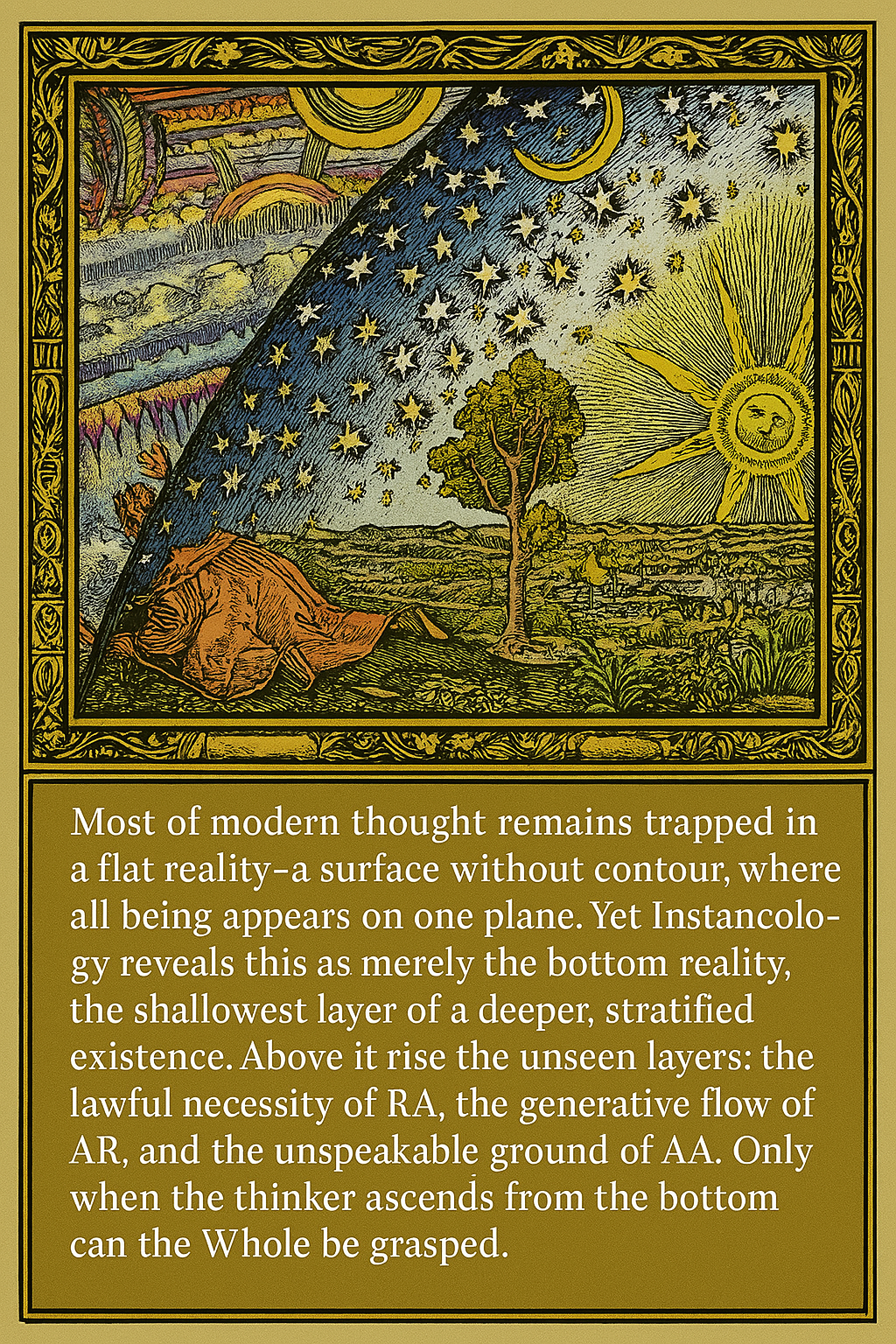
Why Instancology Offended 100% of Its Readers
Why Instancology Offended 100% of Its Readers
If a work offends some readers, it is controversial.
If it offends many, it is radical.
If it offends everyone, it has touched something foundational.
Instancology appears to have offended 100% of its readers, not because it is aggressive in tone, but because it is aggressive in ontology. It does not merely challenge opinions, schools, or ideologies; it challenges the conditions under which readers understand, judge, and exist. This makes offense not accidental, but inevitable.
1. It Invalidates Every Reader’s Ontological Position
Most philosophical works argue within an accepted framework: materialism, idealism, empiricism, phenomenology, analytic logic, theology, science, or common sense.
Instancology does something unforgivable:
it declares all existing frameworks to be relative instances (RR or AR) and therefore non-ultimate.
No reader escapes this move.
Scientists discover they are not approaching ultimate truth.
Philosophers discover their systems are not foundational.
Religious readers discover God is not absolute in the way they assumed.
Skeptics discover skepticism itself is relative.
Even sympathizers discover their agreement is also an instance, not a privilege.
Offense arises because Instancology does not argue against a view; it relocates it. People do not feel debated—they feel displaced.
2. It Ends Philosophy Instead of Participating in It
Readers approach philosophy expecting dialogue, refinement, or improvement.
Instancology instead claims that the historical task of philosophy is complete.
This is not arrogance in style; it is terminal in implication.
From Thales to Heidegger, philosophy searched for ultimate grounding. Instancology claims that:
Philosophy can only deal with Something
The Absolute Absolute (AA) is not Something
Therefore philosophy, by its own structure, cannot reach AA
This means:
No future philosophy can surpass it by better arguments
No counter-system can “correct” it without already presupposing it
Readers are offended because they are not invited to continue the game. The game is declared over.
3. It Removes the Moral High Ground from All Camps
Many readers tolerate intellectual disagreement as long as their moral identity remains intact. Instancology removes that refuge.
Progressives cannot claim moral inevitability.
Conservatives cannot claim eternal foundations.
Rationalists cannot claim exclusive access to truth.
Mystics cannot claim privileged revelation.
Scientists cannot claim final authority.
By placing all human products in RR (Relative Relative), Instancology strips every camp of the right to say: “At least we are closer to the ultimate.”
People are not offended because they are wrong; they are offended because no one is special.
4. It Denies Human Control over Ultimate Truth
Modern readers—especially intellectuals—are trained to believe that truth is something humans can eventually produce, construct, or discover through effort.
Instancology says the opposite:
AA is not discovered
AA is not constructed
AA is not reasoned
AA is not experienced
AA is the condition of all these
This produces existential offense. If ultimate truth is not something one can earn, then credentials, intelligence, effort, and moral posture lose their metaphysical leverage.
Readers feel robbed—not of answers, but of ontological dignity.
5. It Offers No Psychological Comfort
Most systems, even pessimistic ones, offer compensation:
Meaning
Salvation
Progress
Hope
Mastery
Moral superiority
Instancology offers none.
It offers truth without consolation.
AA does not love you, punish you, guide you, reward you, or justify you. It simply is. This is intolerable to readers accustomed to systems that ultimately revolve around human significance.
6. It Is Immune to Conventional Criticism
Finally, readers sense—often subconsciously—that Instancology cannot be defeated using ordinary intellectual weapons.
Logical critique occurs in RA
Empirical critique occurs in AR
Linguistic critique occurs in RR
But Instancology places all three inside its framework.
This produces a unique irritation:
the reader cannot refute it without already confirming its structure.
Offense here is a defensive reaction to intellectual impotence.
Conclusion: Total Offense Is a Diagnostic, Not a Failure
That Instancology offended 100% of readers is not a sociological accident. It is a structural consequence of what it claims.
A theory that:
Relativizes all human knowledge
Ends philosophy as a discipline
Denies human access to the Absolute
Removes moral and intellectual privilege
Offers truth without comfort
must offend everyone.
If a work had pleased even one camp, it would have failed its own premises.
In this sense, universal offense is not evidence against Instancology.
It is evidence that it has reached below belief, below culture, below ideology—into ontology itself.
And ontology, when exposed, always hurts.