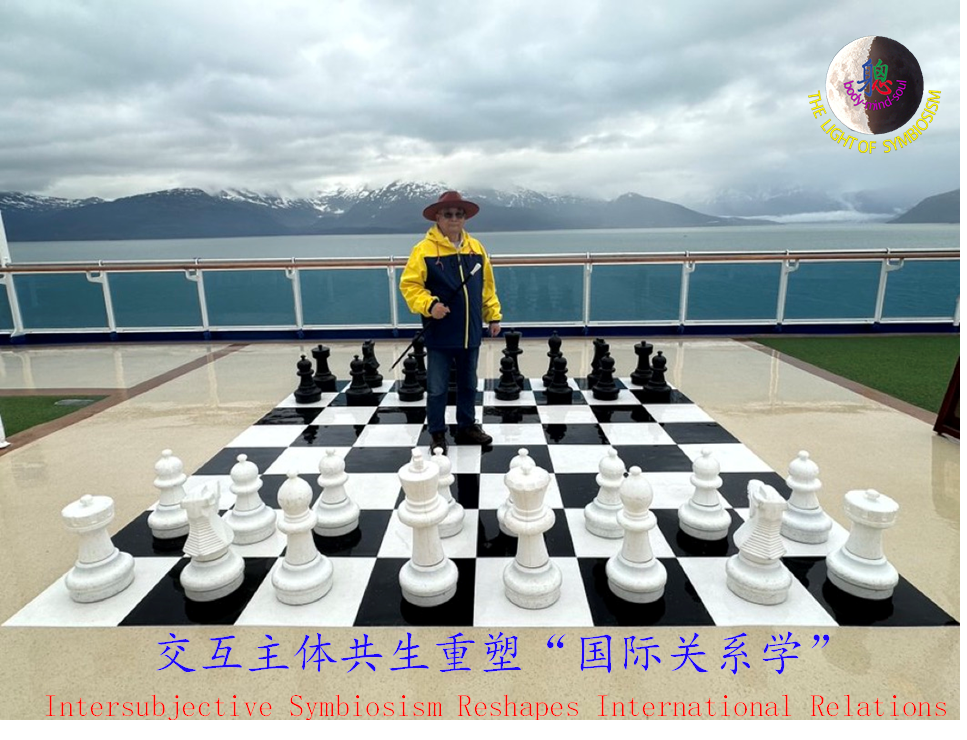
从地缘政治新格局看各国战略先机
从地缘政治新格局看各国战略先机
Strategic Opportunities in the Emerging Geopolitical Order
——是否承认ROC台湾将成为2026年的一个世界焦点
— Whether Recognizing ROC Taiwan Will Become a Global Focus in 2026
钱 宏(Archer Hong Qian)
引言
去年以来出现的所谓“治权互不隶属,主权同而不分”,貌似平稳,实则不过是又一种话术,以其说是“十二字箴言”,不如说是“十二字谶言”,其本身乃死结,何以解台海死结?
明明是两个权能相当的“主治大夫”,各悬各的壶,竞相保安康就好,扯什么“主治統分”?又如何“主治統分”?没法下手嘛!都七十六年了,干嘛要继续拧巴,折腾华人同胞?即使讲“传统家国情怀”,不理会“现代国家观念”,传统上父母兄弟姐妹妯娌郎舅长大了,自古以来,是不是也大都会“分家”?
至于PRC大陆、ROC台湾,孰先孰后“闹分家”(甚至革了几百万人命),要独自“成家立业”,事实明摆着,但也早已没必要纠结,无论谁当政,都各自对“主权在民”的辖区人民负起责任来,至于合法性、绩效性嘛,让辖区人民打分好了!有道是:
自立和而不同,依附同而不和;君子小人立憲,交互主体共生。
我干脆把话说透,自从蒋毛时代“反攻大陆”和“解放台湾”都歇菜,邓时期“823炮击”也按下“暂停键”之后,进入八九十年代的“台海问题”,既不是什么“大陆PRC问题”,也不存在“台湾ROC问题”,“陆独”和“台独”,这两个伪命题,早已经被时间辗得粉碎。
“台海”要解决的问题只是:ROC台湾与PRC大陆,相互承认,彼此尊重,各安其生,华人社区,无论大小,交互共生,从而象新加坡那样,自立于现代国家之林,有啥不好?!
说回“台海问题”不等于台湾问题或大陆问题之地缘政治利益,我坚持近六年来的观察(参看《“鏡”与“燈”:PRC & ROC问题的8个观察点与8种可能的解决方式》 http://symbiosism.com.cn/4289.html 2020;《国是会议:中华式宪政转型的典范——从台湾转型经验看大陆政体结构跃迁可能性》http://symbiosism.com.cn/10366.html 2025;《“国家核心利益”的新认知》 http://symbiosism.com.cn/11265.html ,2025)形成的历史现实判断:
世界各国,尤其是中美两国,谁率先主动承认ROC台湾,并与之友好交往,谁就取得战略先机,但这需要智慧、勇气和能力!谁有?而且,2026年是关键时间窗口!
2025年12月26日凌晨3:33-5:45 夜不成寐于Vancouver
台海问题的地缘政治本质:从死结到交互共生
台海问题,并非单纯的历史遗留或意识形态对峙,而是全球大国博弈的核心节点,涉及世界供应链安全、技术创新与区域稳定。模糊的“主权同而不分”,除了继续纠缠于“统分”心结,无法化解根本冲突;而承认ROC台湾的“主权在民”转型(早在1996年完成直选总统),才是切断死结、推动自立共生的关键。两岸分治76年,已形成各自有效治理体系,继续强求“统分”,只会制造华人社区对立冲突和内耗。
“传统家国情怀”需让位于“现代国家观念”,分家是自然演变,经典案例,如瑞士联邦与德法意、美利坚与英格兰、荷兰与比利时、马来西亚与新加坡,特别是捷克与斯洛伐克,和平分家后各自繁荣。合法性、积效性源于辖区人民打分,符合联合国自决原则,这为台海困局提供理性出路:相互承认、各安其生、交互共生,有何不好?
中美战略博弈:谁先承认ROC,谁获先机
时至今日,中美两国,谁率先对等承认ROC台湾,谁就能主导印太叙事,化解冲突,重建世界秩序。美国有能力通过军售强化台湾不对称防御,却因国内分歧犹豫于全面承认;中国有经济杠杆,却因旧时意识形态路径依赖而与国计民生背道而驰。遗憾的是,两国犹疑不决,甚至反向戮力,时间将证明:缺乏智慧、勇气与能力的拖延,将让其他国家抢占先机,推动承认浪潮。
PRC大陆与ROC台湾对等承认的现实意义
彻底结束“823炮击”至如今“军机军演”的再起的“准战时状态”,签订两岸《和平军事协议》,如亚当斯密所言“有和平法治,就有繁荣”,是大陆和台湾人民的最强心声——这才是PRC当局者应有的意识形态!
核心难点不在自定义的“一中原则”本身,而在于放下长期积累的“自我中心主义”幻象——那种认为PRC必须以主体(Subject)自居,单一中心、单一叙事包管一切“大而无当”的心理包袱,那种“卧榻之侧岂容他人酣睡”的宗法意识。这种幻象,让PRC习惯将自身置于世界与历史的绝对中心,视任何他者异己者为可支配操纵的客体(Object),而认为对等承认(Reciprocal recognition)为“异端”“分裂”与“耻辱”,实则限制了自身战略主动性,收紧了自己的国际空间,大大防碍了专注PRC内部事务(问题堆积如山)的有效处理,而丧失交互主体共生(Intersubjective Symbiosism)的活力。
ROC台湾勇敢承认PRC大陆交互主体共生获益甚丰:
ROC台湾“小即是美”的示范。ROC八九十年代对PRC事实承认后,通过内部“宁静革命”,赢得战略主动,全力以赴所辖区域2300万国民福祉,专注政治经济变革创新和人民生活富裕安康,展开两岸经贸科技文化交流,对PRC大陆居民生活方式(影视休闲娱乐康健)的改变,也影响至深,赢得国际社会的广泛赞誉和同情。
承认ROC并非丧失本不存在的“主权”,而是承认两岸分治76年的客观现实,重新获得“实事求是”的思想核心、精髓和灵魂,正如ROC早已默认PRC大陆1949年“武力分家”后,对大陆的法权治理(那“海棠血泪”的地图,已鲜见于公开政治场合)。
其实,PRC若对等承认ROC台湾主权实体地位,仅是形式上的政治礼仪,回应对岸两蒋之后五位领导人(从李登辉、陈水扁、马英九、蔡英文到赖清德)早已放下历史包袱,通过政策与声明,事实承认PRC对大陆独立治理的既成现实,从而赢得战略主动,带来深远战略利益与自我心理解放。
PRC大陆对等承认ROC台湾的现实利益更加明了确定:
首先,彻底改善国际形象与外交空间。当前“自我中心”叙事让PRC在所谓“涉台议题”上,动辄过度反应,因小失大,非常被动。例如2025年日本女首相在国会答询中,尽其职责和义务,仅诚实提及台湾及周边区域稳定对日本的重要性,PRC外交部(个别人员不顾基本外交礼节出言不逊在先)却强烈抗议、指责“干涉内政”,频频出招,结果反让自己陷入被动。连“亲华”的新加坡总理黄循财都看不下去,公开呼吁PRC“放下历史包袱,与邻国向前看”,代表东南亚国家明确支持日本作为地区稳定力量。这种揪住不放的反应模式,反复上演,越强硬越被国际社会视为缺乏自信与理性。反过来,一旦承认ROC台湾,即可主动止损:不再需要对国际社会每句“涉台言论”高度敏感,放下“远交近攻”的死脑筋(两宋都死于此),避免外交资源浪费,瞬间从“威胁者”转为“成熟大国”形象,必定大幅提升PRC软实力,改善与近邻的关系格局。
其次,赢得战略主动与资源再分配。持续对抗耗费巨额军费与政治精力,却换来国际孤立与区域警惕(美国支持日本、韩国、菲律宾、越南与ROC台湾被迫“抱团”,维护南海、台海、东海、黄海水域安全)。而承认ROC的存在后,可结束军机绕台、军演威慑,签订《和平军事协议》,终止从“823炮击”到今日的准战时敌对状态,将资源转向国内事务和生活方式创新,转向实际可预期的国际利益。其实,历史领土人口争议中,PRC早已务实处理多项现实不可能收回的区域(如夜莺岛、大天池东南部分,分别以条约或援助形式确认归属越南、朝鲜,特别是海森崴、海兰泡、外蒙古等也1996-2004年通过《中俄国界东段协定》等的实地勘界工作,划定了东段约98%的边界线,覆水难收,不是吗?),从未“霸王硬上弓”,却在“台海问题”(再说一遍不等于“台湾问题”)上,执着于“自我中心”幻象,只会暴露极端民族主义情绪的选择性尴尬(对华人狠对他人荏),损耗国力,抽空“一心一意谋发展”的执政理念。
承认ROC并非让步,而是最高明的战略智慧:以最小形式成本,换取最大形象提升、外交被动止损与内部资源释放。难的不是实质困难,而是放下“天朝上国”式的自我中心主义心理包袱。一旦真正放下,海阔天空,PRC将掌握真正主动,两岸人民迎来和平红利,华人整体在全球格局中更具竞争力。何乐而不为?
何况,随着美国“国家安全战略”(NSS)改变,国际格局已然发生变化,国际社会谁都不能不正视而置身事外——大有要么入局,要么出局之势!
2026年关键窗口:全球承认ROC浪潮的开启
近六年的观察判断,2026年是中国军力到2027年达峰值前夕、台湾国防预算激增、地缘压力升级的关键窗口,同时也是各国承认ROC台湾的战略机遇期。发达国家与变革国家,将可能与ROC争相建交或恢复外交关系,最可能的第一批国家包括:以色列、立陶宛、捷克、日本、越南、菲律宾、澳大利亚、新西兰、新加坡、英国、波兰、意大利、加拿大、法国、德国、洪都拉斯、尼加拉瓜、智利、阿根廷、沙特阿拉伯、印度、美国……其中,以色列将成为2026年第一个建交国家。ROC台湾将成为2026年世界瞩目的焦点之一,成为重塑全球新格局的一个热点。
具体可能案例一:以色列——2026年第一个建交国家的有力候选
以色列最有可能成为2026年第一个与ROC台湾建立正式外交关系的国家。目前,两国虽无正式外交,但2025年关系已大幅升温:ROC台湾副外长秘密访以,双方聚焦多层防空系统等国防合作;台湾在加沙冲突中坚定支持以色列立场,引发北京强烈抗议,却进一步巩固互信。两国同为民主阵营、科技强国,共享地缘安全焦虑——以色列面对伊朗威胁,台湾面对大陆压力——这构成深层战略契合。加上二战时期,ROC驻奥地利领馆何凤山对犹太人发放“生命签证”的历史记忆(“随其手也,千百家庭得以绝处逢生;随其笔也,沉溺之身攀上救命方舟;随其声也,域外人士惊识中华文明;随其形也,离乱生命重建人世信心”)。如今,一旦以色列率先承认ROC台湾,将立即获得台湾先进防务技术与半导体供应链支持,T-Dome防空导弹网计划也将获得以色列的“铁穹”(Iron Dome)系统支持,同时在国际上树立“民主守护者”形象,开启连锁反应。这正是智慧与勇气的体现:率先行动,锁定战略先机。
具体可能案例二:立陶宛与捷克
立陶宛与捷克作为欧盟变革先锋,已在2025年深化与ROC台湾关系。立陶宛开设台湾代表处,面对PRC施压仍坚持,推动欧盟对ROC事务参与;捷克通过高访与经济合作,视台湾为欧洲伙伴,尽管选举变动,但亲台势力稳固。两国率先行动,将获科技投资与战略深度,示范欧盟转向,抢占2026年先机。
具体可能案例三:越南、新加坡、菲律宾
越南、新加坡、菲律宾作为东南亚“变革国家”,与ROC台湾关系潜力巨大。越南经济互补,台湾为第四大外资来源,2025年半导体与南海合作深化,平衡外交亲美抗中。新加坡“星光计划”军人培训持续50年,半导体投资数百亿,平衡中美获先机。菲律宾加强军事与人民交流,深化非官方纽带。三国正式承认将释放南海稳定与经济共赢,体现区域智慧。
具体可能案例四:印度
印度与ROC台湾关系在2025年加速:贸易超100亿美元,科技与劳动力合作深化,印度视台湾为对华平衡杠杆。Modi 3.0下,战略融合增强。印度率先承认,将获半导体桥接,强化印太地位。
具体可能案例五:中、南美国家
南美国家如洪都拉斯、尼加拉瓜、智利、阿根廷,正重新评估与ROC台湾关系。洪都拉斯2025年反思与PRC建交得失,考虑恢复ROC台湾纽带;尼加拉瓜等跟随拉美右转浪潮,对ROC不满上升。智利与阿根廷加强经济交流,视ROC台湾为美洲盟友补充。PRC影响力虽在,但中、南美国家可能迫于美“阻击型新门罗主义”压力推动转向。南美承认浪潮将获投资与战略深度,示范全球变革。
结论:自立共生,开启新格局
基于我的六年来的观察,2026年将见证ROC台湾从边缘走向世界焦点。各国承认浪潮将证明:率先行动者获得战略先机,推动台海从死结转向交互共生。无论中美还是其他国家,特别是PRC作为华人社区国家,更当有智慧、有勇气与有能力将迈出决定性的一步。
时间将证明一切——自立和而不同,交互主体共生(Intersubjective Symbiosism),才是人间正道。
以上仅为一家之言,请读者诸君明鉴!
2025年12月26日于温哥华
From Geopolitical New Patterns to National Strategic Initiatives
— Whether Recognizing ROC Taiwan Will Become a Global Focus in 2026
Qian Hong (Archer Hong Qian)
Introduction
The so-called "governance rights are not subordinate to each other, sovereignty is shared but not divided," which emerged last year, appears stable but is actually just another rhetorical tactic. Rather than calling it a "twelve-character mantra," it is better to call it a "twelve-character prophecy." It is itself a dead knot—how can it untie the Taiwan Strait deadlock?
Clearly, there are two governance entities of equal power, like "chief physicians" each hanging their own pots, competing to safeguard health—why insist on "unified governance"? And how to achieve "unified governance"? It's impossible to start! It's been 76 years—why continue to twist and torment the Chinese compatriots? Even if we talk about "traditional family and national sentiments" and ignore "modern state concepts," in tradition, when parents, brothers, sisters, sisters-in-law, brothers-in-law, and uncles-in-law grow up, hasn't history proven that most "divide the family"?
As for PRC Mainland and ROC Taiwan, who first "split the family" (even costing millions of lives) and wanted to "establish their own household" is evident, but it's long past the point of quibbling. No matter who is in power, each should take responsibility for the people in their "sovereignty in the people" jurisdictions. As for legitimacy and performance, let the jurisdictional people score it! As the saying goes:
Self-reliance in harmony yet different, Dependency in sameness yet disharmonious; Gentlemen and villains establish constitutions, Interacting subjects coexist.
I'll speak bluntly: Since the Chiang-Mao era's "counterattack the mainland" and "liberate Taiwan" both fizzled out, and Deng's era pressed "pause" on the "823 artillery bombardment," the "Taiwan Strait issue" entering the 1980s and 1990s is neither a "mainland PRC issue" nor a "Taiwan ROC issue." "Mainland independence" and "Taiwan independence" are both pseudopropositions, long crushed by time.
The "Taiwan Strait" problem to be solved is simply: ROC Taiwan and PRC Mainland mutually recognize each other, respect each other, each live in peace, and Chinese communities, large or small, interact and coexist, thereby standing independently in the forest of modern nations like Singapore—what's wrong with that?!
Speaking of the geopolitical interests of the "Taiwan Strait issue" (not equal to the Taiwan issue or mainland issue), based on my observations over the past six years (see "Mirror and Lamp: 8 Observation Points and 8 Possible Solutions to PRC & ROC Issues" http://symbiosism.com.cn/4289.html 2020; "National Affairs Conference: A Paradigm of Chinese-Style Constitutional Transformation—Looking at Mainland Political Structure Leap Possibilities from Taiwan's Transformation Experience" http://symbiosism.com.cn/10366.html 2025; "New Recognition of 'National Core Interests'" http://symbiosism.com.cn/11265.html, 2025), I have formed a historical and realistic judgment:
Countries around the world, especially China and the United States, whoever takes the initiative to recognize ROC Taiwan and engage in friendly interactions will seize the strategic initiative, but this requires wisdom, courage, and capability! Who has it? Moreover, 2026 is the key time window!
December 26, 2025, sleepless from 3:33-5:45 AM in Vancouver
Geopolitical Essence of the Taiwan Strait Issue: From Deadlock to Interactive Coexistence
The Taiwan Strait issue is not merely a historical legacy or ideological confrontation but a core node in global great-power games, involving global supply chain security, technological innovation, and regional stability. The vague "sovereignty shared but not divided" only continues to entangle the "unification-division" knot and cannot resolve the fundamental conflict; recognizing ROC Taiwan's "sovereignty in the people" transformation (completed with direct presidential elections as early as 1996) is the key to cutting the deadlock and promoting self-reliant coexistence. The two sides have been divided for 76 years, forming their own effective governance systems; continuing to force "unification" will only create conflicts and internal consumption in the Chinese community.
"Traditional family and national sentiments" must yield to "modern state concepts"; division is a natural evolution. Classic cases include the Swiss Confederation with Germany, France, and Italy; the United States with England; the Netherlands with Belgium; Malaysia with Singapore; especially the Czech Republic and Slovakia, each prospering after peaceful separation. Legitimacy and effectiveness stem from jurisdictional people's scoring, in line with the UN self-determination principle, providing a rational way out for the Taiwan Strait dilemma: mutual recognition, each living in peace, interactive coexistence—what's wrong with that?
Sino-US Strategic Game: Whoever Recognizes ROC First Gains the Initiative
Today, between China and the United States, whoever first recognizes ROC Taiwan on equal terms will dominate the Indo-Pacific narrative, resolve conflicts, and rebuild world order. The United States has the capability to strengthen Taiwan's asymmetric defense through arms sales but hesitates on full recognition due to domestic divisions; China has economic leverage but is constrained by outdated ideological path dependence, running counter to national interests and people's livelihood. Regrettably, both countries are hesitant or even working in reverse; time will prove that a lack of wisdom, courage, and capability in delay will let other countries seize the initiative, triggering a wave of recognitions.
Real Significance of PRC Mainland and ROC Taiwan Mutual Recognition
Thoroughly ending the "quasi-wartime state" from the "823 artillery bombardment" to today's recurring "military aircraft exercises," signing a cross-strait "Peace Military Agreement," as Adam Smith said "with peace and rule of law, there is prosperity," is the strongest voice of mainland and Taiwan people—this is the ideology that PRC authorities should have!
The core difficulty is not in the self-defined "one China principle" itself but in letting go of the long-accumulated "self-centered" illusion—that sectarian consciousness of "how can others sleep soundly beside my bed." This illusion makes PRC accustomed to placing itself at the absolute center of the world and history, viewing any other or dissident as an object (Object) to be dominated and manipulated, and considering reciprocal recognition as "heresy," "division," and "shame," which actually limits its own strategic initiative, tightens its international space, greatly hinders effective handling of focused PRC internal affairs (problems piling up like mountains), and loses the vitality of intersubjective symbiosis (Intersubjective Symbiosism).
ROC Taiwan's courageous recognition of PRC mainland intersubjective symbiosis has benefited greatly:
ROC Taiwan's "small is beautiful" demonstration. After ROC's de facto recognition of PRC in the 1980s and 1990s through internal "quiet revolution," it gained strategic initiative, fully focusing on the welfare of 23 million nationals in its jurisdiction, concentrating on political-economic reform innovation and people's prosperous and peaceful lives, unfolding cross-strait economic, technological, and cultural exchanges, deeply influencing PRC mainland residents' lifestyles (film, leisure, entertainment, health), and winning widespread praise and sympathy from the international community.
Recognizing ROC is not losing non-existent "sovereignty" but recognizing the objective reality of 76 years of division across the strait, regaining the ideological core, essence, and soul of "seeking truth from facts," just as ROC has long defaulted PRC mainland's legal governance after the 1949 "armed separation" (the "blood and tears maple leaf" map is rarely seen in public political occasions).
In fact, if PRC recognizes ROC Taiwan's sovereign entity status on equal terms, it is merely a formal political courtesy, responding to the five leaders after the two Chiangs (from Li Teng-hui, Chen Shui-bian, Ma Ying-jeou, Tsai Ing-wen to Lai Ching-te) who have long let go of historical burdens, through policies and statements, de facto recognizing PRC's independent governance of the mainland as an established fact, thereby gaining strategic initiative and bringing profound strategic benefits and self-psychological liberation.
The real benefits of PRC mainland recognizing ROC Taiwan on equal terms are even clearer and more certain:
First, thoroughly improving international image and diplomatic space. The current "self-centered" narrative makes PRC overreact on so-called "Taiwan-related issues," often losing big over small things, very passive. For example, in 2025, Japan's female prime minister, in fulfilling her duties and obligations during parliamentary questioning, merely honestly mentioned the importance of stability in Taiwan and surrounding areas to Japan; PRC's Ministry of Foreign Affairs (some individuals disregarding basic diplomatic etiquette by speaking rudely first) strongly protested, accusing "interference in internal affairs," frequently making moves, resulting in putting itself in a passive position. Even "pro-China" Singapore Prime Minister Wong Chun Wai couldn't stand it, publicly calling on PRC to "let go of historical burdens and look forward with neighbors," representing Southeast Asian countries' clear support for Japan as a regional stabilizing force. This mode of clinging and not letting go is repeatedly staged; the more hardline, the more international society sees it as lacking confidence and rationality. Conversely, once recognizing ROC Taiwan, it can actively stop losses: no longer needing to be highly sensitive to every "Taiwan-related statement" from the international community, letting go of the rigid mindset of "ally with distant, attack near" (both Song dynasties died from this), avoiding waste of diplomatic resources, instantly transforming from "threatener" to "mature great power" image, which will greatly enhance PRC's soft power and improve relations with neighbors.
Second, gaining strategic initiative and resource reallocation. Continued confrontation consumes huge military expenditures and political energy, yet brings international isolation and regional vigilance (the United States supports Japan, South Korea, the Philippines, Vietnam, and ROC Taiwan being forced to "huddle" to maintain security in the South China Sea, Taiwan Strait, East China Sea, and Yellow Sea waters). Recognizing ROC's existence can end military aircraft circling Taiwan and military exercise deterrence, sign a "Peace Military Agreement," terminate the quasi-wartime hostile state from "823 artillery bombardment" to today, redirect resources to domestic affairs and lifestyle innovation, to actual expected international interests. In fact, in historical territorial population disputes, PRC has long pragmatically handled many areas that are realistically impossible to recover (such as Nightingale Island, the southeastern part of Great Tianchi, respectively confirmed belonging to Vietnam and North Korea through treaties or aid forms, especially Vladivostok, Blagoveshchensk, Outer Mongolia, etc., also through the "Sino-Russian Eastern Border Agreement" and other on-site demarcation work from 1996-2004, delimiting about 98% of the eastern border line, spilt milk cannot be recovered, right?), never "forcing the bow," yet on the "Taiwan Strait issue" (again, not equal to "Taiwan issue"), clinging to the "self-centered" illusion, will only expose the selective embarrassment of extreme nationalist emotions (harsh on Chinese, lenient on others), depleting national strength, emptying the governing philosophy of "wholeheartedly seeking development."
Recognizing ROC is not a concession but the highest strategic wisdom: with minimal formal cost, exchanging for maximum image enhancement, diplomatic passive damage control, and internal resource release. The difficulty is not in substance but in letting go of the "celestial empire" style self-centered psychological burden. Once truly let go, the sea is vast and the sky is high; PRC will grasp true initiative, cross-strait people will welcome peace dividends, and the overall competitiveness of Chinese in the global pattern will be stronger. What harm is there?
Moreover, with the change in the US "National Security Strategy" (NSS), the international pattern has already shifted, and the international community cannot ignore or stay out of it—it's a matter of joining the game or being out!
2026 Key Window: The Opening of Global Recognition of ROC Wave
From six years of observation and judgment, 2026 is the eve of China's military power peaking in 2027, Taiwan's defense budget surge, and geopolitical pressure escalation key window, but also the strategic opportunity period for countries to recognize ROC Taiwan. Developed countries and reformist countries may compete to establish or restore diplomatic relations with ROC, the most likely first batch of countries include: Israel, Lithuania, Czech Republic, Japan, Vietnam, Philippines, Australia, New Zealand, Singapore, United Kingdom, Poland, Italy, Canada, France, Germany, Honduras, Nicaragua, Chile, Argentina, Saudi Arabia, India, United States... Among them, Israel will become the first country to establish relations in 2026. ROC Taiwan will become one of the world's focuses in 2026, a hotspot reshaping the global new pattern.
Specific Possible Case One: Israel—The Strong Candidate for the First Diplomatic Relations in 2026
Israel is most likely to become the first country to establish formal diplomatic relations with ROC Taiwan in 2026. Currently, the two countries have no formal diplomacy, but relations have warmed significantly in 2025: ROC Taiwan's deputy foreign minister secretly visited Israel, both sides focusing on multi-layer air defense systems and other defense cooperation; Taiwan firmly supported Israel's position in the Gaza conflict, triggering strong protests from Beijing but further consolidating mutual trust. Both countries are democratic camps and technological powerhouses, sharing geopolitical security anxieties—Israel facing Iran threats, Taiwan facing mainland pressure—this constitutes deep strategic alignment. Plus, during World War II, ROC's consul in Austria, Ho Fengshan, issued "life visas" to Jews ("With his hand, thousands of families survived desperation; with his pen, the drowning climbed onto the lifeboat; with his voice, outsiders were amazed by Chinese civilization; with his form, displaced lives rebuilt confidence in the world"). Today, once Israel takes the lead in recognizing ROC Taiwan, it will immediately gain Taiwan's advanced defense technology and semiconductor supply chain support, the T-Dome air defense missile network plan will also receive support from Israel's "Iron Dome" system, while establishing a "democratic guardian" image internationally, triggering a chain reaction. This is the embodiment of wisdom and courage: take the lead, lock in strategic initiative.
Specific Possible Case Two: Lithuania and Czech Republic
Lithuania and Czech Republic, as EU reform pioneers, have deepened relations with ROC Taiwan in 2025. Lithuania opened a Taiwan representative office, persisting despite PRC pressure, promoting EU participation in ROC affairs; Czech Republic views Taiwan as a European partner through high-level visits and economic cooperation, with pro-Taiwan forces stable despite election changes. The two countries taking the lead will gain technological investment and strategic depth, demonstrating EU shift, seizing 2026 initiative.
Specific Possible Case Three: Vietnam, Singapore, Philippines
Vietnam, Singapore, Philippines as Southeast Asian "reform countries," have huge potential in relations with ROC Taiwan. Vietnam's economic complementarity, Taiwan as fourth largest foreign investor, deepened semiconductor and South China Sea cooperation in 2025, balanced diplomacy pro-US anti-China. Singapore's "Starlight Plan" military training has continued for 50 years, semiconductor investment hundreds of billions, balancing China-US gains initiative. Philippines strengthens military and people exchanges, deepening non-official ties. The three countries' formal recognition will release South China Sea stability and economic win-win, embodying regional wisdom.
Specific Possible Case Four: India
India's relations with ROC Taiwan accelerated in 2025: trade over 100 billion USD, deepened technology and labor cooperation, India views Taiwan as a counter-China balance lever. Under Modi 3.0, strategic integration strengthened. India taking the lead in recognition will gain semiconductor bridging, strengthening Indo-Pacific position.
Specific Possible Case Five: Central and South American Countries
South American countries like Honduras, Nicaragua, Chile, Argentina are reassessing relations with ROC Taiwan. Honduras reflected on gains and losses from establishing relations with PRC in 2025, considering restoring ROC Taiwan ties; Nicaragua and others follow Latin American right-turn wave, rising dissatisfaction with ROC. Chile and Argentina strengthen economic exchanges, viewing ROC Taiwan as American ally supplement. PRC influence is present, but Central and South American countries may be pushed to shift under US "blocking new Monroeism" pressure. The South American recognition wave will gain investment and strategic depth, demonstrating global change.
Conclusion: Self-Reliant Coexistence, Opening New Patterns
Based on my six years of observation, 2026 will witness ROC Taiwan from the margins to the world's focus. The wave of national recognitions will prove: those who act first gain strategic initiative, pushing the Taiwan Strait from deadlock to interactive coexistence. Regardless of China-US or other countries, especially PRC as a Chinese community nation, should have the wisdom, courage, and capability to take the decisive step.
Time will prove everything—self-reliance in harmony yet different, intersubjective symbiosis (Intersubjective Symbiosism), is the right path in the world.
The above is only one family's opinion, please discerning readers judge!
December 26, 2025, in Vancouver