
美國與中國已經處於冷戰狀態
美國與中國已經處於冷戰狀態
最近瀏覽視頻,看到了吳國光教授與「三個水槍手」的訪談節目,訪談的主題是:中美進入新冷戰了嗎?在訪談中吳國光教授表示:不贊同中美已經進入新冷戰的觀點、認為冷戰在本質上與現在的狀態不完全一樣,有以下兩個特點還不具備:一、冷戰的兩個陣營是意識形態和政治製度的對立為主;現在的美國並沒有將中國當成意識形態和政治製度方面的對手;二、冷戰要形成兩個陣營,在這方面以中共為首的專製政權開始抱團已經比較明顯,但是美國還沒有與其它民主國家形成明顯的政治同盟;這兩條證明冷戰還不具備基本的特點。
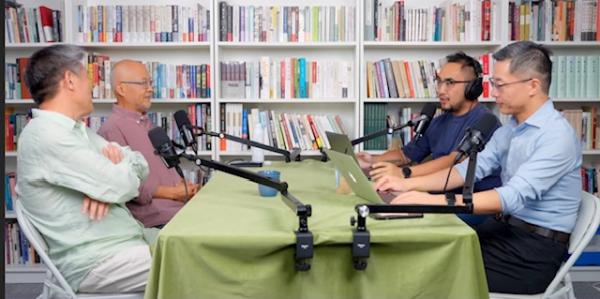
吳國光教授與「三個水槍手」的訪談(视频截图)
吳國光教授是著名的政治學者,他的觀點具有一定的代表性,而美中關系是影響到整個世界的政治格局、關系到世界的安全與穩定,關系到中國社會未來的政治發展走向。因此正確的定位美中關系在政治上意義重大,因此本人願意借此闡明自己的觀點,並與吳國光教授商榷:
要談冷戰問題首先要明確冷戰的概念,弄清什麽叫冷戰?按照互聯網上的解釋:冷戰是除直接軍事交戰以外的一切敵對行動的總稱。冷戰的性質就是雙方關系緊張、嚴重對立、相互對抗;冷戰的方式和手段就是:輿論戰、滲透顛覆、封鎖製裁、軍備競賽、和平演變、代理人戰爭等一切非直接軍事交戰以外的方法。
其次就是冷戰不是以公開宣布為準,而是一種事實和狀態的存在,就像兩次世界大戰和美蘇冷戰沒有誰事先宣布正式開戰,而是客觀事實證明已經處於交戰狀態。
再有就是冷戰是雙方的,是互相的對抗,即可以是兩個國家之間,也可以是兩個政治集團之間。
因此根據冷戰的性質和定義,根據美中兩國目前的實際政治、經濟、外交現狀,本人認為吳國光教授的:現在美中兩國沒有進入新冷戰,以及美國並沒有將中國當成意識形態和政治製度方面的對手;美國這邊還沒有與其它民主國家形成明顯的政治同盟的兩個基本特點均不能成立。

吕洪来:美國與中國已經處於冷戰狀態
首先:美國與中國在意識形態與政治製度上的根本對立是世人皆知的客觀事實,中共對美國長期以來的顛覆、滲透、破壞、知識產權竊取、輸出毒品禍害美國社會,這些都是不爭的事實,也是中國對美國的冷戰手段。過去三十年人們之所以沒有明顯感覺到美中之間的冷戰,是因為以美國為首的西方民主陣營施行的是:通過經濟融合,促使中國實現政治轉型的的策略,只不過目前看來這個策略顯然是失敗了,但是這絕不等於美中之間沒有冷戰;
第二、美國與其它西方民主國家早就已經形成政治同盟:如北約集團、美日韓同盟、美國與其它亞太國家建立的如美新奧、美菲、美臺同盟,這些軍事與政治同盟都是以政治製度與意識形態為基礎建立的,是不會因為某項具體政策的變化而改變的;
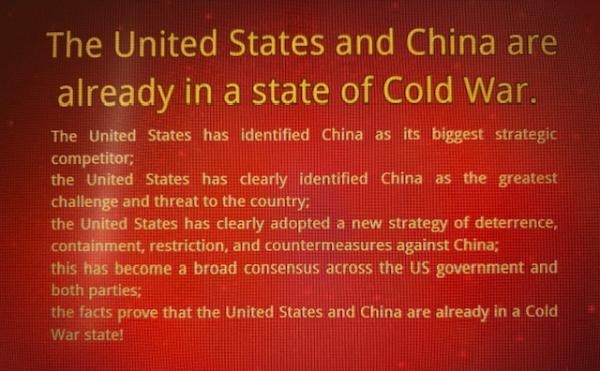
第三、由於通過經濟融合,促使中國實現政治轉型策略的失敗,最近幾年美國已經重新調整了對中國的戰略,就是將中國列為了最大的戰略競爭對手,對中國采取威懾、防範、限製、反製的新戰略,可以看看這兩年美國國會參眾兩院通過的一系列針對中國的法案:
《臺灣保證實施法案》
《戰略國土情報和執法以抵禦中共法》
《2025年對華技術轉讓管控法案》
《美中人工智能能力脫鉤法案》
《2024年保護美國創新和經濟安全免受中共侵害法案》
《反製中共無人機法案》
《結束中國主導美國電動汽車法案》
《通過外國投資保障幫助挫敗中國法案》
《美國人工智能與中國脫鉤法案》
這些明確針對中共政權、防範中共政權、反製中共政權的法案,就是美國對中國的冷戰。
第四、特別是在對中國的政策上,強化戰略競爭、維護美國核心利益,遏製中共的擴張、將中國視為美國最大的競爭對手、將中國視為對美國最大的挑戰和威脅、已經成為美國朝野和兩黨的廣泛共識,這就是表明美國與中國進行冷戰,已經成爲了美國朝野和兩黨的廣泛共識,不是任何個人所能夠左右和改變的。
第五、就是美中貿易戰已經遠遠超出了美中兩國之間的範圍,成為了一場國際性的圍堵中國的經濟大戰,在目前美國政府與各國已經簽署的貿易協議中,都加入了防止中國產品進行轉口貿易和洗產地的毒丸條款,這就等於是所有與美國保持貿易正常關系的國家,形成了一個在國際貿易中共同防範和圍堵中國的陣營,大家說這不是冷戰又是什麽?!
第六、就在本人準備動手寫這篇文章的時候,美國發布了2025年《國家安全戰略》報告,國家戰略報告明確美國專註於被視為美國核心利益區的西半球,以及印太地區,特別是中國臺灣問題;
對於中國和臺灣地區,2025年《國家安全戰略》批評歷屆美國政府試圖把中國納入基於規則的國際秩序。 新版戰略將中國視為主要的經濟與技術競爭者及潛在軍事挑戰者,報告要求盟友必須加大投入,積極參與集體防禦,集中力量對抗中國的「掠奪性經濟行為」,透過威懾避免與中國發生直接軍事沖突。這就是等於美国公開宣布了對中共政權的新冷戰!
吳國光教授之所以得出上述結論,從訪談看主要是因為吳教授對川普新政府的一些外交政策和措施存在誤解,忽略了美國政府是三權分立。需要指出的是:冷戰不是誰發動的,而是兩種截然對立的意識形態和政治製度無法和平共處,又要避免熱戰的必然。
中共的黨國體製一經建立,即意味著中共選擇了與人類文明相對立,也意味著與人類文明世界冷戰的開始,只是由於一段歷史時期內,雙方出於戰略的需要,以及中共被迫選擇改革開放和韜光養晦,使得這種意識形態與政治製度的對立得到緩和。
中國的政治製度不變,美中不可能真正的友好,現如今40年的改革開放已經走到了盡頭,美中雙方的戰略需求都早已不復存在,公開的冷戰就成為必然。冷戰不是誰宣布的,而是事實存在的,是兩種意識形態、兩種價值觀、兩種政治製度的實實在在的較量和博弈。今天已經不是美中之間是否存在冷戰的問題,而是冷戰是否會進一步升級的問題,是零和博弈最終是什麽結果的問題。
呂洪來
2025年12月8日星期一
The United States and China are already in a state of Cold War.
I recently watched a video interview with Professor Wu Guoguang and the "Three Water Gunmen." The topic of the interview was: Has the US and China entered a new Cold War? In the interview, Professor Wu Guoguang stated that he does not agree with the view that the US and China have entered a new Cold War, and believes that the Cold War is not entirely the same as the current situation in essence, and does not yet possess the following two characteristics: First, the two camps of the Cold War were primarily opposed in terms of ideology and political system; the United States does not currently regard China as an adversary in terms of ideology and political system. Second, for the Cold War to form two camps, it is quite evident that authoritarian regimes led by the CCP have begun to band together, but the United States has not yet formed a clear political alliance with other democratic countries. These two points prove that the Cold War does not yet possess the basic characteristics of the Cold War.
An interview with Professor Wu Guoguang and the "Three Water Gunmen" (video screenshot)
Professor Wu Guoguang is a renowned political scientist, and his views are representative to a certain extent. The US-China relationship influences the global political landscape, relates to world security and stability, and is crucial to the future political development of Chinese society. Therefore, a correct understanding of the US-China relationship is of great political significance. I would like to take this opportunity to clarify my own views and discuss them with Professor Wu Guoguang:
To discuss the Cold War, we must first clarify its concept. What exactly is the Cold War? According to internet explanations, the Cold War is a general term for all hostile actions other than direct military combat. The nature of the Cold War is characterized by tense, severely antagonistic, and confrontational relations between the two sides. Its methods and means include: propaganda warfare, infiltration and subversion, blockades and sanctions, arms races, peaceful evolution, proxy wars, and all other methods other than direct military combat.
Secondly, the Cold War was not defined by public declarations, but rather by the existence of a fact and a state of affairs. Just like the two World Wars and the Cold War between the US and the Soviet Union, neither side declared war beforehand; rather, objective facts proved that they were already in a state of conflict.
Furthermore, the Cold War was a bilateral conflict, a mutual confrontation, which could occur between two countries or between two political blocs.
Therefore, based on the nature and definition of the Cold War, and based on the current political, economic, and diplomatic situation between the United States and China, I believe that Professor Wu Guoguang's two basic characteristics—that the United States and China have not entered a new Cold War, and that the United States does not regard China as an opponent in terms of ideology and political system, and that the United States has not yet formed a clear political alliance with other democratic countries—are both untenable.
Lü Honglai: The United States and China are already in a state of Cold War.
First, the fundamental ideological and political opposition between the United States and China is an objective fact known to all. The CCP's long-standing subversion, infiltration, sabotage, intellectual property theft, and drug export that harms American society are undeniable facts and constitute China's Cold War tactics against the United States. The reason people haven't clearly felt a Cold War between the US and China over the past thirty years is because the Western democratic camp, led by the United States, implemented a strategy of using economic integration to facilitate China's political transformation. However, this strategy has clearly failed, but this absolutely does not mean that there was no Cold War between the US and China.
Second, the United States has long formed political alliances with other Western democracies, such as NATO, the US-Japan-South Korea alliance, and alliances between the United States and other Asia-Pacific countries, such as the US-New Zealand-Ottoman alliance, the US-Philippines alliance, and the US-Taiwan alliance. These military and political alliances are based on political systems and ideologies and will not change due to changes in any specific policy.
Third, due to the failure of its strategy to facilitate China's political transformation through economic integration, the United States has recently readjusted its strategy towards China, designating China as its biggest strategic competitor and adopting a new strategy of deterrence, containment, restriction, and countermeasures. One can examine the series of bills targeting China passed by the US Senate and House of Representatives in the past two years:
* *Taiwan Assurance Implementation Act*
* *Strategic Territorial Intelligence and Law Enforcement to Counter the CCP Act*
*Technology Transfer Controls with China Act of 2025*
*U.S.-China Artificial Intelligence Capabilities Decoupling Act*
*Protecting U.S. Innovation and Economic Security from the CCP Act of 2024*
*Countering the CCP's Drones Act*
*Ending China's Dominance in U.S. Electric Vehicles Act*
*Helping to Frustrate China Through Foreign Investment Assurance Act*
*U.S. Artificial Intelligence and China Decoupling Act*
These bills, which are clearly aimed at, prevent, and counter the Chinese Communist Party regime, constitute the United States' Cold War against China.
Fourth, especially in its policy toward China, the strengthening of strategic competition, the safeguarding of core U.S. interests, the containment of the CCP's expansion, and the view of China as the U.S.'s biggest competitor and the greatest challenge and threat to the U.S. have become a broad consensus across the U.S. government and both parties. This demonstrates that a Cold War between the U.S. and China has become a broad consensus across the U.S. government and both parties, and it is not something that any individual can influence or change.
Fifth, the US-China trade war has far exceeded the scope of the two countries and has become an international economic war to contain China. Currently, all trade agreements signed by the US government with various countries include poison pill clauses to prevent the re-export of Chinese products and the laundering of country of origin. This means that all countries maintaining normal trade relations with the US have formed a united front to jointly prevent and contain China in international trade. What else is this but the Cold War?!
Sixth, just as I was preparing to write this article, the United States released the 2025 National Security Strategy report. The National Security Strategy report clearly states that the United States is focusing on the Western Hemisphere, which is considered to be a core area of U.S. interests, as well as the Indo-Pacific region, especially the Taiwan issue.
Regarding China and Taiwan, the 2025 National Security Strategy criticizes successive U.S. administrations for attempting to integrate China into the rules-based international order. The new strategy identifies China as a major economic and technological competitor and a potential military challenger, demanding that allies increase their investment and actively participate in collective defense, focusing their efforts on countering China's "predatory economic behavior" and avoiding direct military conflict through deterrence. This is tantamount to the U.S. openly declaring a new Cold War against the CCP regime!
Professor Wu Guoguang reached the above conclusion primarily because, based on the interview, he misunderstood some of the Trump administration's foreign policy and measures, overlooking the fact that the US government operates on a separation of powers. It should be pointed out that the Cold War was not initiated by anyone, but rather an inevitable consequence of two diametrically opposed ideologies and political systems being unable to coexist peacefully while simultaneously trying to avoid hot war.
Once the CCP's party-state system was established, it meant that the CCP had chosen to oppose human civilization, and it also meant the beginning of a cold war with the civilized world. However, due to strategic needs of both sides during a certain period of history, and the CCP's forced choice to reform and open up and to bide its time, this ideological and political conflict was eased.
Without changes to China's political system, genuine friendship between the US and China is impossible. The 40 years of reform and opening up have come to an end, and the strategic needs of both sides have long since disappeared, making an open Cold War inevitable. The Cold War is not something declared by anyone; it is a reality, a real contest and game between two ideologies, two values, and two political systems. Today, the question is no longer whether a Cold War exists between the US and China, but whether it will escalate further, and what the ultimate outcome of this zero-sum game will be.
Lu Honglai,
Monday, December 8, 2025